Okinawa 101: Where It Is, What It's Like, and Why Go
New to Okinawa? Where these Japanese islands are, how their history and the US military shaped them, the weather month by month, and how to get there from the US.
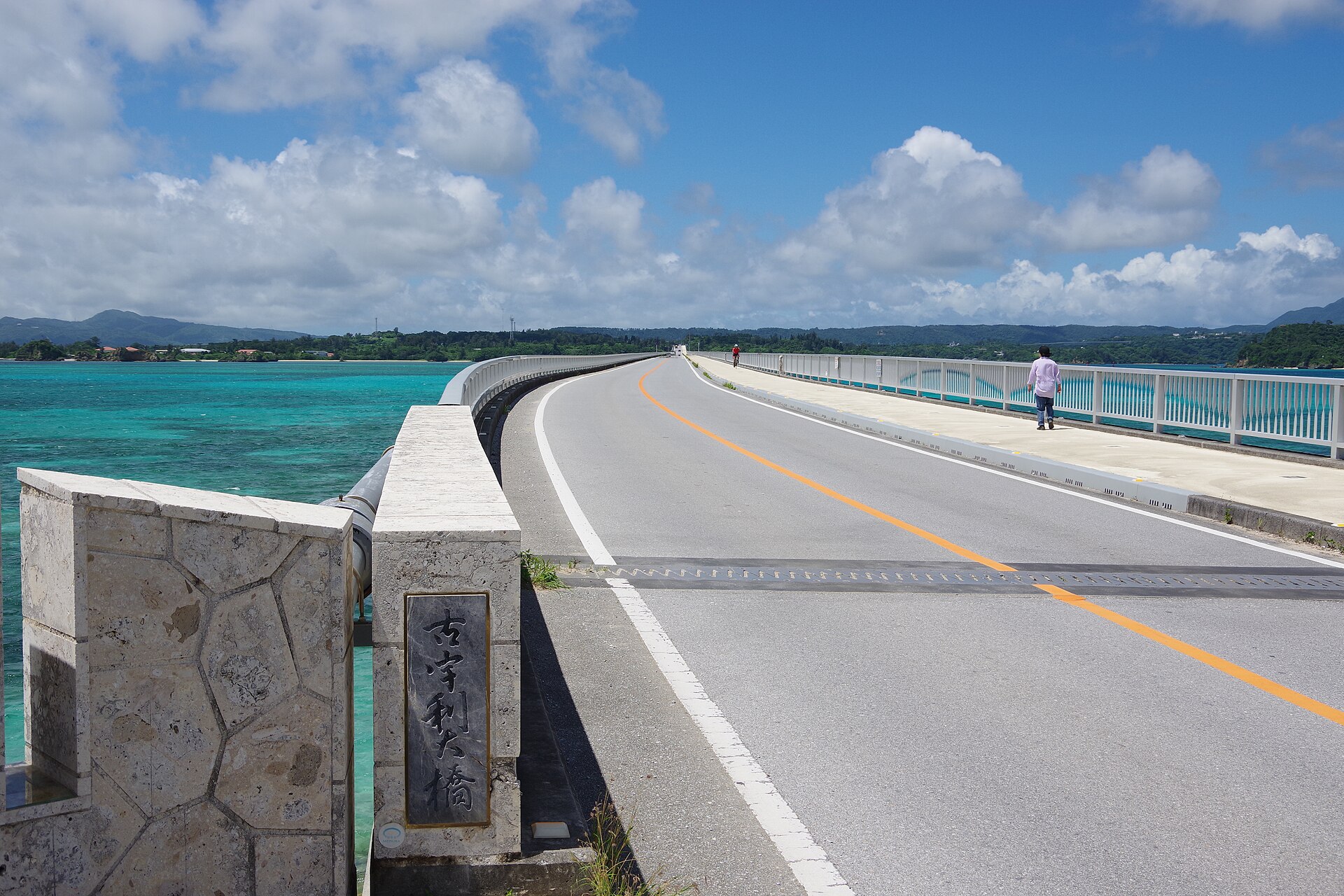
- Where
- Southwest Japan, between Kyushu and Taiwan
- From Tokyo
- about 3 h by air
- From the US
- nonstop SFO–Naha planned from Mar 27, 2027
- Best time
- April, or October–November
You step off the plane at Naha Airport, on the southwest coast of Okinawa Island, about 3 hours after leaving Tokyo's Haneda. The Yui Rail monorail runs from the terminal into Naha, the prefectural capital, where Kokusai-dori is the main shopping street. On a hill above the city stands Shuri Castle, where Ryukyu kings ruled for roughly 450 years, and its rebuilt red main hall opens to the public on November 23, 2026. Farther up the coast, in Chatan, the sun goes down over American Village.
If the news about a nonstop flight from San Francisco was the first time you heard of Okinawa, you're not alone. This page is the short version: where the islands are, why they feel different from the rest of Japan, why so many Americans already live there, and when to plan a trip.
- First-time visitors to Okinawa
- Travelers from the US planning around the SFO–Naha nonstop
- People coming on orders or visiting family stationed in Okinawa
- 47Inhabited islands, counting small islands joined to the main island by bridges (2018 figure)
- 1972Okinawa returns to Japan after 27 years of US administration
- 70%Share of the land used only by US forces in Japan that lies in Okinawa
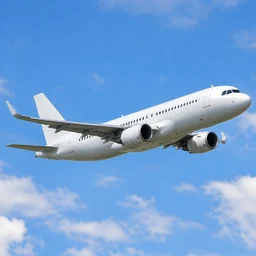
- About 3 hFlight time from Tokyo's Haneda to Naha (winter 2026–27 timetable)
As of October 2026, Okinawa Prefecture and the Skymark timetable
Where is Okinawa?
Okinawa is a prefecture in the far southwest of Japan. Look at a map of East Asia and find the southern tip of Japan's main islands: Okinawa Prefecture starts south of there and runs toward Taiwan in a loose string of islands across the sea between Kyushu (Japan's southern main island) and Taiwan. Okinawa Prefecture says 47 of those islands have people living on them, counting small islands joined to the main island by bridges (figure as of 2018).
Most visitors spend their time on Okinawa Island (often called the "main island"). Naha, the prefectural capital, sits on its southwest coast, and Naha Airport is where nearly every trip starts. The other islands are farther than many people expect. Ishigaki, for example, is about 411 km (255 miles) from Naha according to the prefecture, so it works better as its own trip than as a day out.
Okinawa in dates
- 1429Sho Hashi unites three rival states under one crown. The Ryukyu Kingdom rules from Shuri Castle.
- Mar 27, 1879Japan's government abolishes the kingdom and sets up Okinawa Prefecture.
- Mar 26, 1945US forces land in the Kerama Islands, and the Battle of Okinawa begins.
- 1945In the battle that follows, Shuri Castle is destroyed.
- 1963Japan's first A&W restaurant opens in Okinawa, under US rule.
- May 15, 1972Okinawa returns to Japan after 27 years of US administration.
- 1992Shuri Castle is restored and reopens.
- 2000Shuri Castle's site and eight other castle ruins and sacred places join the UNESCO World Heritage List.
- Oct 31, 2019Fire destroys the castle's main hall and other key buildings.
- Nov 23, 2026The rebuilt main hall opens to the public.
- Mar 27, 2027United plans to start nonstop flights from San Francisco to Naha.
As of October 2026, Okinawa Prefecture, the Cabinet Office and official sites
Japan, but different: the Ryukyu Kingdom
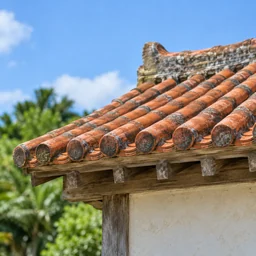
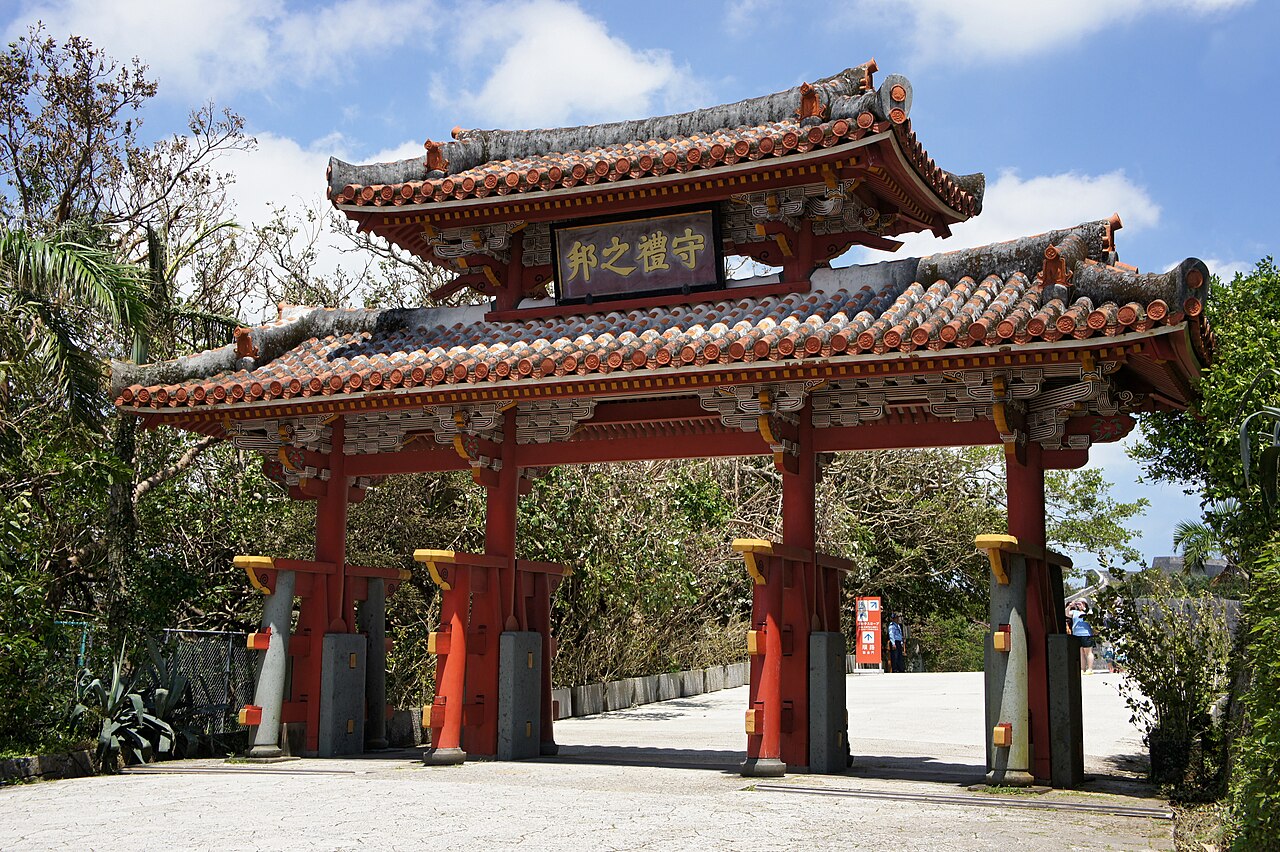
Okinawa is part of Japan, with the yen, Japanese law and Japanese trains-and-convenience-store efficiency. But before it was a Japanese prefecture, it was the Ryukyu Kingdom, and it still has its own food, music and architecture. Japan's Cabinet Office, which oversees the castle park, gives the short version: after Sho Hashi brought the three states together in 1429, two royal lines governed from Shuri Castle, on a hill above today's Naha, for roughly 450 years. The kingdom traded with both China and Japan, and you can see both influences in the castle's design. The Okinawa Prefectural Archives mark March 27, 1879 as the day it ended.
That separate past is a big part of why Okinawa looks and sounds different from Tokyo or Kyoto. The UNESCO listing of 2000 carries the name "Gusuku Sites and Related Properties of the Kingdom of Ryukyu."
Shuri Castle right now
Shuri Castle has been rebuilt more than once: after the Battle of Okinawa in 1945, it was restored and reopened in 1992, and then a fire on October 31, 2019 took its main hall and other key buildings.
The rebuilt main hall (Seiden) is nearly finished. The park's official site says a completion ceremony is planned for November 22, 2026, and that the hall opens to the public on November 23, 2026. The park is closed all day on November 22, and on November 23 the paid area and main hall open at noon, so check the park site before you go. From that date, adult entry to the paid area is ¥1,000, about $6, and seeing inside the main hall requires a timed reservation in 30-minute slots. You can still walk the paid area, including the outside of the main hall, without a reservation if the slots are full (as of October 2026, official site).
The American connection
Okinawa's modern story is closely tied to the United States. After US forces landed in the Kerama Islands on March 26, 1945 and the Battle of Okinawa was fought, the islands stayed under US administration for 27 years. They returned to Japan on May 15, 1972, according to Okinawa Prefecture. American food and culture are part of daily life.
The bases stayed after reversion. Okinawa Prefecture says about 70% of the land used exclusively by US forces in Japan is in Okinawa, and those facilities cover about 15% of the main island. The prefecture's July 2025 statistics put the share at 70.27% as of January 1, 2024. This is a real political issue in Okinawa, and many residents have strong feelings about it. As a visitor, it's worth knowing the background before you arrive.
The American years left marks you can still see and taste. One small example: Japan's Agency for Cultural Affairs records that Japan's first A&W restaurant opened in Okinawa in 1963, while the islands were still under US rule, and its survey of modern buildings in Okinawa includes the larger second A&W building, opened in 1969.
If you're coming to Okinawa on orders or to visit family stationed there, the nonstop flight is aimed partly at you.
Weather and when to go
Okinawa is subtropical: winters are mild, summers are hot and humid, and late summer is typhoon season. In Naha, January averages a high of 19.8°C (68°F) and a low of 14.9°C (59°F), so even midwinter is jacket weather, not coat weather. July and August highs average about 32°C (89°F), with high humidity.
- May 10 – June 21Rainy season, by the official normal (both dates approximate). June is Naha's wettest month on average.
- June 1 – September 30 (2026)Okinawa Prefecture's box jellyfish advisory.
- July – OctoberTyphoons are most likely, with August the peak.
As of October 2026, Japan Meteorological Agency and Okinawa Prefecture
The sweet spots for most first-timers are April (warm, before the rainy season) and October to November (warm sea, fewer typhoons than late summer). The local pro basketball team, the Ryukyu Golden Kings, plays from fall to spring, so a home game is a good add-on from October through May.
| Jan | Feb | Mar | Apr | May | Jun | Jul | Aug | Sep | Oct | Nov | Dec | |
|---|---|---|---|---|---|---|---|---|---|---|---|---|
| Avg high | 68°20°C | 68°20°C | 71°22°C | 76°24°C | 81°27°C | 86°30°C | 89°32°C | 89°32°C | 87°31°C | 83°28°C | 77°25°C | 71°22°C |
| Avg low | 59°15°C | 59°15°C | 62°17°C | 66°19°C | 72°22°C | 77°25°C | 81°27°C | 80°27°C | 78°26°C | 74°24°C | 69°20°C | 62°17°C |
| Rain | 4.0"102mm | 4.5"114mm | 5.6"143mm | 6.3"161mm | 9.7"245mm | 11.2"284mm | 7.4"188mm | 9.4"240mm | 10.8"275mm | 7.1"179mm | 4.7"119mm | 4.3"110mm |
| Typhoons | – | – | – | – | 0.4 | 0.6 | 1.5 | 2.2 | 1.9 | 1.1 | 0.3 | – |
| Rainy season | ● | ● | ||||||||||
| Box jellyfish | ● | ● | ● | ● | ||||||||
| Golden Kings | ● | ● | ● | ● | ● | ● | ● | ● |
- Typhoons: about 7.7 a year come near Okinawa, most in August and September. Flights and ferries can stop for a day or two — keep your plans flexible in late summer.
- Rainy season: around May 10 to around June 21 in a typical year.
- Swimming: Swim at managed beaches during their swimming season, when lifeguards keep watch and nets are set against box jellyfish. Many beaches have neither. Check the beach's official page before you go.
- Box jellyfish: advisory June 1 – September 30 (2026); most stings in July and August; swim inside the nets and cover your legs.
- Basketball: B.LEAGUE season runs fall to spring, with playoffs in May.
- The nonstop: United's SFO–Naha nonstop starts March 27, 2027, three times a week. Some reports say it is seasonal; that is not confirmed yet.
Climate: Japan Meteorological Agency, Naha climate normals 1991–2020. Typhoons: JMA normals. Jellyfish: Okinawa Prefecture, box jellyfish advisory. Checked 2026-10-10.
How to get there
From the US today, you fly to a big Japanese or Asian hub and connect. From Tokyo's Haneda Airport, domestic flights to Naha take about 3 hours on Skymark's winter timetable (October 25, 2026 to March 27, 2027), and about 2 hours 15 minutes in the other direction (as of October 2026, official site). ANA and other airlines also fly the route.
From March 27, 2027, United plans to fly nonstop from San Francisco to Naha three times a week. The route has been announced but still needs government approval, and the schedule can change. Our SFO–Naha flight guide has the expected schedule, the aircraft, and what to sort out before you land: Japan's entry forms on Visit Japan Web, cash, and driving permits.
Prices in Japan are in yen. On October 2, 2026, one US dollar bought 157.81 yen according to Federal Reserve data, so a ¥1,000 ticket cost about $6.34.
Main island vs. outer islands
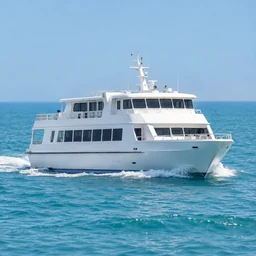


You don't need to see everything on one trip. Think of Okinawa in four parts:
- Naha & the South: the capital, Kokusai-dori, Shuri Castle, and the airport you land at. The Yui Rail monorail links the airport and the city.
- Chatan & Central: American Village and its sunsets, the music bars of Koza, and the Golden Kings' arena. This is where the American influence is strongest.
- Motobu & the North: Churaumi Aquarium, Kouri Bridge, and quieter beaches. A car makes this much easier.
- The Outer Islands: the Kerama Islands are close. Zamami Village says its high-speed boat from Naha's Tomari Port takes 50 to 70 minutes. Miyako and Ishigaki are much farther south and are best treated as separate trips.
For a first visit of five to seven days, we suggest staying on the main island and adding one outer island only if you have time.
What to read next
We're adding guides region by region. Start with the area that matches your trip, and check back as the first flight gets closer.
Sources
- Okinawa Prefecture — Location of Okinawa (kids' page, Japanese)
- Okinawa Prefecture — History overview (Japanese)
- Okinawa Prefecture — New proposal for a peaceful and prosperous Okinawa, 2022 (Japanese)
- Okinawa Prefectural Archives — March 27, 1879: Okinawa Prefecture established (Japanese)
- Cabinet Office — Shurijo Castle Park (Japanese)
- Shurijo Castle Park — Seiden opens to the public Nov 23, 2026 (Japanese)
- Shurijo Castle Park — New fees and timed reservations (Japanese)
- Shurijo Castle Park — closures on Nov 22 and morning of Nov 23 (Japanese)
- Okinawa Prefecture — US military bases in Okinawa (Japanese)
- Okinawa Prefecture — US and SDF bases in Okinawa, statistics, July 2025 (Japanese, PDF)
- Ministry of Defense — Reducing the burden of US bases on Okinawa (Japanese)
- Okinawa Defense Bureau, Ministry of Defense — Acquiring and managing defense facilities (Japanese)
- Okinawa General Bureau, Cabinet Office — About the bureau, set up at reversion on May 15, 1972 (Japanese)
- Agency for Cultural Affairs — Okinawa modern architecture survey: A&W (Japanese)
- Okinawa Prefecture — Yaeyama region overview (Japanese)
- Zamami Village — Getting to Zamami (Japanese)
- Skymark Airlines — Timetable, winter 2026–27 (Oct 25, 2026 – Mar 27, 2027, PDF)
- Federal Reserve H.10 via FRED — USD/JPY
- Visit Japan Web (Digital Agency)
- Japan Meteorological Agency — rainy season normals (Japanese)
- Japan Meteorological Agency — typhoon normals (Japanese)
- Okinawa Prefecture — box jellyfish advisory (Japanese)
- United Airlines — United Adds 10 International Cities for 2027 (Aug 25, 2026)