Renting a Car in Okinawa as an American: International Driving Permit, Left-Side Roads and Tolls
Your US license alone won't let you drive in Okinawa. Here's how to get the right International Driving Permit before you fly, what to show at the rental counter, and how Japan's roads, tolls and rules differ from home.
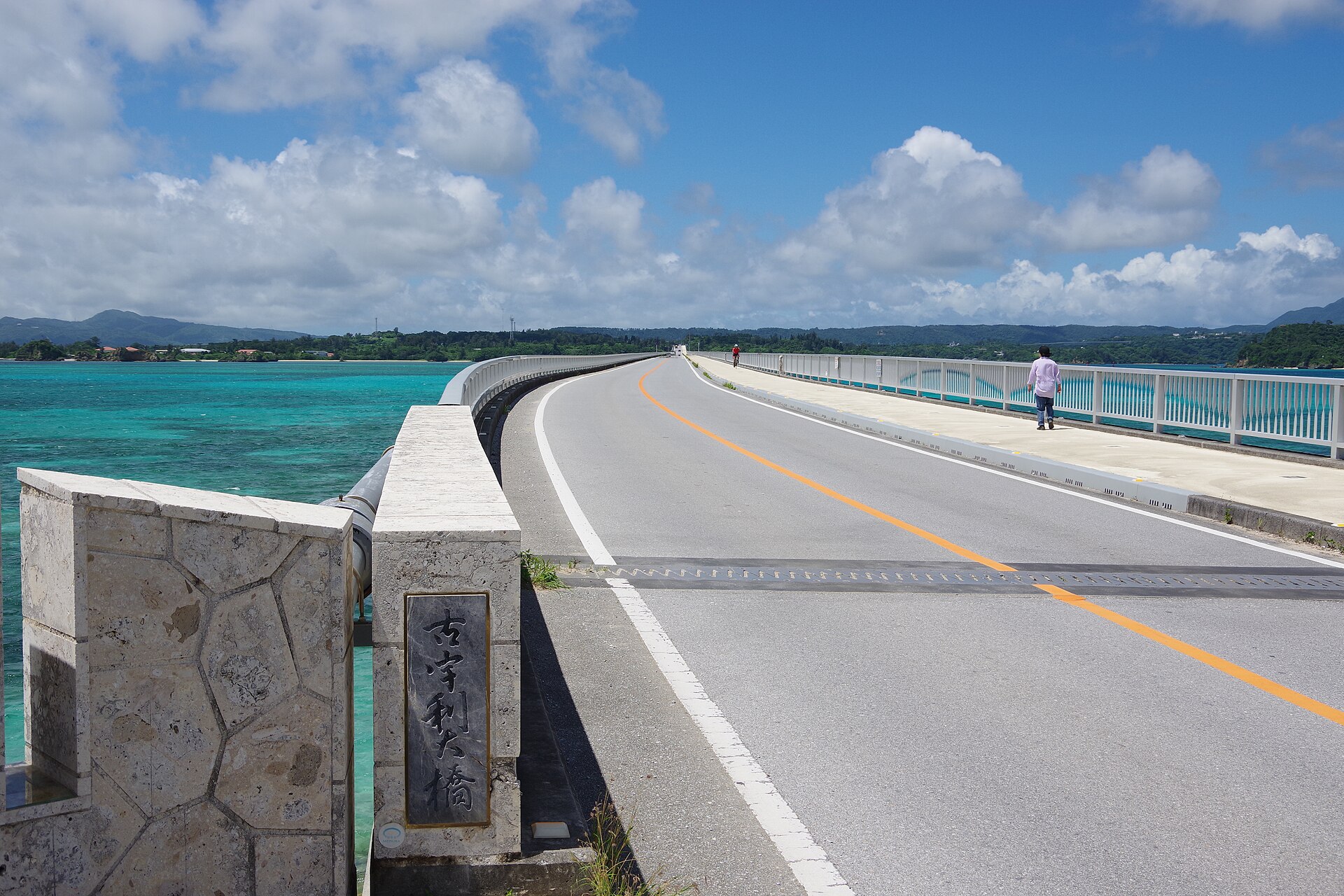
- Best time
- any month, but don't drive when a typhoon is near (most often August and September)

You walk up to the rental counter near Naha Airport with three things in hand: your passport, your US driver's license and a small paper booklet that names the 1949 Geneva Convention. Leave the booklet at home, and your US license alone won't get you the keys, however long you've been driving.
This guide covers the permit you need to get before you leave the US, what to bring to the counter, and the handful of Japanese road rules that catch American drivers out.
- Travelers on the new SFO–Naha nonstop who want to see the north
- Families with small kids and lots of luggage
- Anyone staying in Onna or Motobu
- First-time drivers on the left side of the road
- 1949The only International Driving Permit Japan accepts: the Geneva Convention one
- 1 yearThe longest you can drive in Japan on that permit, counted from the day you land
- Under 6Children this age must ride in a child seat
- ¥1,040Expressway toll, Naha IC to Kyoda, regular car with an ETC card (¥1,610 in cash)

As of October 2026, National Police Agency and NEXCO West official sites
Do you need a car?
It depends on where you sleep. In Naha, the Yui Rail monorail and taxis cover most of what first-timers do. For Chatan and the Onna coast, buses run from the airport, but slowly. For the Motobu Peninsula and the Churaumi Aquarium, a car makes the day much easier, especially if you land on the afternoon flight from San Francisco.
Our Naha Airport to your hotel guide compares the monorail, buses, taxis and rental cars area by area.
Get your International Driving Permit before you leave
Your US license is not enough on its own. Japan's National Police Agency says visitors can drive with an International Driving Permit (IDP) issued under the 1949 Geneva Convention on Road Traffic, which the US has joined (as AATA notes). Permits issued under other conventions, or in other formats, don't count (as of October 2026, National Police Agency).
Paper only. JNTO, Japan's national tourism organization, says only the booklet-style paper IDP is valid in Japan. Card-style and smartphone versions are not (as of October 2026, JNTO).
Get it at home. AAA issues IDPs only to holders of a valid US license, so get yours from a US issuer before you fly (as of October 2026, AAA official site).
Who issues IDPs in the US
Two organizations issue the 1949 Convention permit to US drivers:
- AAA, which says it is one of the two organizations the US Department of State authorizes. You can apply online, at a branch or by mail.
- The American Automobile Touring Alliance (AATA), which takes applications online.
We don't print the fees here; check them on AAA's IDP page and AATA's site. Before you pay anyone, check that the permit you're ordering is the 1949 Geneva Convention one.
- Before you applyMake sure your US license is valid. AAA issues IDPs only to holders of a valid US license
- Applying online with AAAAllow 5 business days for processing, plus shipping back to you
- Leaving within 7 business daysAAA says to go to a branch in person instead (call ahead)
- Already abroadAAA takes online applications from overseas too; by mail, allow 5–7 weeks
- Too early?AAA won't issue an IDP more than 6 months ahead
- Your trip datesThe IDP is valid for 1 year from issue. Your rental dates must fall inside that year
- At Naha AirportGo through a staffed immigration booth so you get a landing stamp in your passport
- At the counterShow the IDP, your US license and your passport, all originals
As of October 2026, AAA, National Police Agency, Immigration Services Agency and JNTO official sites
Why the landing stamp matters. You can drive on an IDP for up to one year from the day you land in Japan, or until the IDP expires, whichever comes first (as of October 2026, National Police Agency). JNTO says the rental company checks your landing date from the stamp in your passport.
Face recognition gates don't stamp passports. If you do use one, ask the immigration staff right after the gate, or at the immigration office, before you reach customs. Japan's Immigration Services Agency says it can't accept a request for the stamp after that point (as of October 2026, official site).
What to bring to the rental counter
- Your IDP (the 1949 Geneva Convention booklet)
- Your US driver's license, valid and the original, not a photocopy or a phone image
- Your passport, with the landing stamp
- A credit card. Toyota Rent a Car, for example, takes only credit cards for online bookings made on or after July 22, 2026, not debit or prepaid cards (as of October 2026, Toyota official site)
Bring the originals: JNTO says only the paper IDP booklet is valid, and your license must be valid (as of October 2026, JNTO). Companies set their own document rules, so read your booking confirmation.
Booking the car
Companies that take bookings in English
Toyota Rent a Car, one of the large rental companies, has an English booking site. Search for your pick-up office, such as Naha Airport, on each site. We list it because you can book and get help in English. We haven't ranked them, we don't copy ratings from review sites, and we have no relationship with any of them.
- Toyota Rent a Car: English online booking, plus an English phone line, 0800-7000-815 toll-free in Japan, from 8:00 to 20:00 every day (rent.toyota.co.jp/eng) (All as of October 2026, official sites.) JNTO's car rental page lists more companies that serve visitors, with their contact details. Check each company's site for English booking and an office near Naha Airport.
You don't pick the car up inside the terminal. The companies have offices outside the airport and run shuttle buses from stops outside the 1st floor. Our airport guide explains where.
Child seats
Japanese law doesn't let you drive with a child under 6 who isn't in a child seat (as of October 2026, National Police Agency). Rental companies rent seats; reserve one when you book. Toyota, for example, charges ¥1,650 per rental for a baby or child seat and ¥1,100 for a junior seat (as of October 2026, Toyota official site). Prices and seat types differ by company.
ETC cards
An ETC card is a small card that pays expressway tolls automatically at the gate. With a rental car, you settle the tolls when you return the car (as of October 2026, JNTO).
Whether you can rent one, and what it costs, varies by company and by office. Toyota charges ¥550 per rental for the card, and says some offices, including those on remote islands, don't have cars with ETC units (as of October 2026, Toyota official site). Ask for one when you book, and check that company's official site.
What the coverage options mean
Every Japanese rental includes basic insurance, but the extras have names Americans won't know. Here's how Toyota, as one example, sets them up. Other companies use different names and prices.
| Term | What it means | Toyota's example (as of October 2026, official site) |
|---|---|---|
| Basic insurance | Included in the rate | Covers injury to others with no upper limit; you pay the first ¥50,000 of damage to property or the car |
| Damage waiver | An add-on that removes that ¥50,000 share | Sold per 24 hours; confirm the price when you book |
| NOC (non-operation charge) | A flat fee for the days the company can't rent the car out while it's repaired | ¥20,000 (about $127) if you can drive it back to the office; ¥50,000 (about $317) if you can't, or don't return it to the office |
| Package with NOC cover | Removes your share of damage costs and the NOC | Toyota calls its version "Double Protection" |
Toyota also says its insurance doesn't cover an accident you don't report to the police (as of October 2026, Toyota official site). Dollar figures use ¥157.81 per $1 (as of October 2, 2026, Federal Reserve).
Driving on the left: the rules that differ from home
Japan drives on the left, and many accidents happen at turns (as of October 2026, JNTO). The National Police Agency's leaflet for visiting drivers highlights these rules:
- No turns on red. At a red light, you can't go straight or turn either way. Wait for green.
- Green arrows. If a green arrow is lit, you can go the way it points.
- Turning right means crossing oncoming traffic. Wait, with your signal on, until oncoming cars going straight or turning left have passed.
- Pedestrians go first at intersections.
- Yellow center line: don't cross it to pass.
- Stop signs mean a full stop, then a look left and right. (All as of October 2026, National Police Agency.)
JNTO adds that everyone in the car must wear a seat belt, using a phone while driving is illegal, and you must stop at railroad crossings (as of October 2026, JNTO). Speed limits are posted in km/h: 40 km/h is about 25 mph.
Don't drink and drive. Driving with 0.15 mg or more of alcohol per liter of breath is an offense, and driving while drunk is a crime at any level (as of October 2026, National Police Agency). Fines and prison terms can also apply to passengers in the car and to anyone who gave the driver a drink (as of October 2026, National Police Agency). If you drink, don't drive at all.
Signs you'll see
Two common signs are written in Japanese. Since July 2017, new and replaced versions are in principle bilingual, with English underneath, and the older Japanese-only versions remain valid (as of October 2026, National Police Agency).
The National Police Agency publishes an English guide to Japan's traffic lights and road signs with pictures of each sign. It's worth ten minutes before your trip. The agency's Traffic Bureau page has more leaflets in English.
Expressway and tolls
The Okinawa Expressway is a toll road run by NEXCO West, one of Japan's expressway companies.
- ¥1,040Naha IC to Kyoda, regular car, with an ETC card (about $6.60)
- ¥1,610The same trip in cash (about $10.20)
- ¥730Okinawa-Minami to Kyoda, regular car, with an ETC card
- ¥1,130Okinawa-Minami to Kyoda in cash
As of October 2026, NEXCO West official site (Japanese)
These tolls include an Okinawa Expressway discount that NEXCO West plans to run until March 31, 2027 (planned, per NEXCO West). The SFO–Naha flights are scheduled to start days before that, so check the tolls again if you travel in spring 2027.
At the gate. Lanes marked in purple are ETC lanes, where the card pays automatically. Lanes marked in green take cash or a credit card (as of October 2026, JNTO).
Parking, gas and returning the car
- Parking: spaces can be hard to find in towns, and you can be fined for parking outside a marked space (as of October 2026, JNTO). Ask your hotel about parking before you book the car.
- Gas: some stations are full-service, where staff fill the tank for you, and some are self-service (as of October 2026, JNTO).
- Refuel before you return it. JNTO calls this a basic rule. Check your booking for how full the tank should be.
- Before you leave the lot: walk around the car with the staff and note any scratches or dents (as of October 2026, JNTO).
If something happens
If there's an accident, help anyone who is hurt, then:
- Call 119 for an ambulance.
- Call 110 for the police, even if no one is hurt (as of October 2026, National Police Agency).
- Then contact your rental company, using the number in your rental papers.
The police leaflet has a page in English and other languages that you can show to someone nearby if you need help making the calls. Save the leaflet (PDF) to your phone before you go.
When to go
You can rent a car in any month. The rainy season usually runs from around May 10 to around June 21. Typhoons come closest most often in August and September. When one approaches, stay off the road and follow your rental company's instructions. Follow the Japan Meteorological Agency for typhoon information, not forecasts from other sources.
| Jan | Feb | Mar | Apr | May | Jun | Jul | Aug | Sep | Oct | Nov | Dec | |
|---|---|---|---|---|---|---|---|---|---|---|---|---|
| Avg high | 68°20°C | 68°20°C | 71°22°C | 76°24°C | 81°27°C | 86°30°C | 89°32°C | 89°32°C | 87°31°C | 83°28°C | 77°25°C | 71°22°C |
| Avg low | 59°15°C | 59°15°C | 62°17°C | 66°19°C | 72°22°C | 77°25°C | 81°27°C | 80°27°C | 78°26°C | 74°24°C | 69°20°C | 62°17°C |
| Rain | 4.0"102mm | 4.5"114mm | 5.6"143mm | 6.3"161mm | 9.7"245mm | 11.2"284mm | 7.4"188mm | 9.4"240mm | 10.8"275mm | 7.1"179mm | 4.7"119mm | 4.3"110mm |
| Typhoons | – | – | – | – | 0.4 | 0.6 | 1.5 | 2.2 | 1.9 | 1.1 | 0.3 | – |
| Rainy season | ● | ● | ||||||||||
| Box jellyfish | ● | ● | ● | ● | ||||||||
| Golden Kings | ● | ● | ● | ● | ● | ● | ● | ● |
- Typhoons: about 7.7 a year come near Okinawa, most in August and September. Flights and ferries can stop for a day or two — keep your plans flexible in late summer.
- Rainy season: around May 10 to around June 21 in a typical year.
- Swimming: Swim at managed beaches during their swimming season, when lifeguards keep watch and nets are set against box jellyfish. Many beaches have neither. Check the beach's official page before you go.
- Box jellyfish: advisory June 1 – September 30 (2026); most stings in July and August; swim inside the nets and cover your legs.
- Basketball: B.LEAGUE season runs fall to spring, with playoffs in May.
- The nonstop: United's SFO–Naha nonstop starts March 27, 2027, three times a week. Some reports say it is seasonal; that is not confirmed yet.
Climate: Japan Meteorological Agency, Naha climate normals 1991–2020. Typhoons: JMA normals. Jellyfish: Okinawa Prefecture, box jellyfish advisory. Checked 2026-10-10.
Official info


- National Police Agency, English pages for drivers: npa.go.jp
- JNTO, renting a car in Japan: japan.travel
- AAA, International Driving Permit: aaa.com
- AATA, International Driving Permit: aataidp.com
- NEXCO West, Okinawa Expressway tolls (Japanese): w-nexco.co.jp
Next:
- Before you fly, check passports, customs and medicines with our entry checklist.
- Pick your base with Where to Stay in Okinawa.
- Plan the drive north with our Churaumi Aquarium and Motobu day trip.
- Visiting Naha first? See the Shuri Castle guide.
Sources
- Immigration Services Agency of Japan — face recognition gates and passport stamps (Japanese)
- National Police Agency — How to Drive in Japan, for holders of foreign licenses (PDF, May 2026)
- National Police Agency — Traffic Safety Rules leaflet (PDF)
- National Police Agency — Traffic Lights and Road Signs (PDF, updated December 2023)
- National Police Agency — Child Seats Save Children (PDF)
- National Police Agency — Eradication of Drinking and Driving (PDF)
- National Police Agency — notice on the bilingual STOP and SLOW signs (PDF, April 21, 2017, Japanese)
- National Police Agency — Traffic Bureau (English)
- JNTO — Things to know when renting a car
- AAA — International Driving Permit
- American Automobile Touring Alliance — International Driving Permit
- NEXCO West — Okinawa Expressway ETC tolls (Japanese)
- Toyota Rent a Car — English site
- Toyota Rent a Car — insurance and compensation
- Toyota Rent a Car — accessories and options
- Federal Reserve H.10 via FRED — USD/JPY