Using a Konbini in Okinawa: ATMs, Payment, Hot Food and Local Favorites
Japan's convenience stores are where you'll grab cash, breakfast and a cold drink on day one. Here's how the ATMs, the register and the microwave work in Okinawa, from the chains' own pages.
- Cash
- Seven Bank ATMs in 7-Eleven stores take Visa and Mastercard around the clock
- Pay
- cards and Apple Pay or Google Pay at the big chains, cash in yen only
- Ask for
- a bag (small fee), chopsticks, heating
- Best time
- all year
It's your first morning in Okinawa. You step into a bright, cold-aired corner store, pick a rice ball and an iced tea off the shelf, and walk to the cash machine in the corner. The screen asks you to choose a language. A few taps later you have yen, breakfast and a plan.
That store is a konbini, Japan's word for a convenience store. This guide covers the parts first-time visitors ask about: getting cash with a US card, paying at the register, the questions staff ask you, and where Okinawa differs.
- First-time visitors to Japan
- Travelers who land in Naha and need yen fast
- Families picking up snacks, water and breakfast
- Anyone staying somewhere without a restaurant nearby
- ¥100,000Most you can take out per withdrawal at a Seven Bank ATM with a card issued abroad (about $634)
- 24 hoursSeven Bank ATM hours for Visa and Mastercard cards
- 10+ languagesSeven Bank ATM screen choices, English among them
- ¥10,000At Lawson, card payments from this amount up need a signature or PIN (about $63)
As of October 2026, Seven Bank, Lawson and 7-Eleven Japan official sites
The three chains you'll see
You'll see three national chains in Okinawa:
- 7-Eleven
- FamilyMart
- Lawson
They look alike from the street, but the cash machines inside differ, and that matters most with a US card. In Okinawa, FamilyMart's own 2010 announcement names a separate company, Okinawa FamilyMart, as the operator of the stores there. So what a chain's national page promises may not hold in every Okinawa store.
Opening hours. Lawson's visitor page describes the chain as open 24 hours a day; the 7-Eleven and FamilyMart pages we read don't say. Hours can still differ by store, so check the one you plan to use on the chain's store finder.
Getting cash: konbini ATMs with a US card
The safest bet is a Seven Bank ATM. Seven Bank runs the cash machines in 7-Eleven stores, and it publishes the most detail in English. It accepts cards from these networks:
- Visa and PLUS
- Mastercard, Maestro and Cirrus
- American Express, JCB, Discover, Diners Club and UnionPay
Seven Bank warns that some cards with these marks may still be refused (as of October 2026, official site). Bring a second card from a different bank, or some yen, just in case.
Hours. Visa and Mastercard cards work 00:00 to 24:00, every day of the year. The other networks stop for a few minutes around midnight; American Express, for example, runs 00:05 to 23:50. Machines can also be down for system maintenance (all as of October 2026, official site).
Limits. With a card issued abroad, you can take out up to ¥100,000 (about $634) per withdrawal. If your card is read by its magnetic stripe rather than its chip, the limit is ¥30,000 (about $190). Ask for less if the machine says you're over (all as of October 2026, official site).
Fees. Seven Bank says its fee for cards issued abroad depends on the card brand (as of October 2026, official site). Its English pages don't list the amount, so we don't give one (unconfirmed). Your own bank may charge as well. Ask your bank before you fly.
How a Seven Bank withdrawal goes
Here are the steps in the order Seven Bank gives them (as of October 2026, official site):
- Put your card in.
- Choose your language. Seven Bank lists English, Chinese, Korean, Thai, Malay, Indonesian, Vietnamese, French, German and Portuguese.
- Choose to withdraw.
- Choose the account to take money from.
- Type in your PIN.
- Choose the amount, in yen.
- Choose the currency you'll be billed in.
- Take your cash, your card and the receipt.
About step 7. Seven Bank explains the two choices. Pick your home currency and the dollar amount is fixed right there at the machine. Pick yen and your card company turns it into dollars later, when it bills you (as of October 2026, official site). Which one costs you less depends on your card, so ask your card company before you travel.
If your PIN is rejected, Seven Bank says to contact the company that issued your card. Don't keep trying at the same machine.
FamilyMart and Lawson ATMs
FamilyMart's visitor page says stores may have one of two kinds of ATM, and only some stores have them (as of October 2026, official site):
- E-net ATM: Visa, PLUS, Mastercard, Maestro, Cirrus, JCB and UnionPay; screens in English, Chinese, Korean and Japanese.
- Japan Post Bank ATM: Visa, PLUS, Discover, JCB, Mastercard, Maestro, Cirrus and UnionPay; 16 screen languages, English among them.
Lawson's visitor page says Lawson ATMs pay out yen around the clock to Visa, Mastercard, JCB and UnionPay cards issued abroad, with screens in English, simplified Chinese and Korean. It adds that the cards accepted can differ from machine to machine (as of October 2026, official site).
The Okinawa catch. Both pages describe the chains nationwide. For FamilyMart, there's an Okinawa clue: in April 2016 it announced that the E-net ATMs in its stores would take Visa, Mastercard and JCB cards issued abroad, and its list of machines counted 110 in Okinawa at the time. That release is ten years old. We couldn't confirm which machines Okinawa's FamilyMart and Lawson stores have today, or whether a given Lawson machine takes US cards (unconfirmed). If you want certainty, find a Seven Bank ATM with Seven Bank's ATM Locator.
At Naha Airport. There's a Seven Bank ATM in the international arrival lobby on the 1st floor, open 7:00 am to 10:00 pm daily. Another Seven Bank ATM is on the 2nd floor of the domestic area, open 6:00 am to midnight (both as of October 2026, Naha Airport official site). Our first-night guide also covers the airport's currency exchange counter.
Paying at the register
All three chains list the major US card brands, and two of them name Apple Pay and Google Pay. Here's what each chain's visitor page says.
Transit cards. 7-Eleven and Lawson list the big mainland transit cards, such as Suica and ICOCA, on their national pages. Okinawa's own transit card, OKICA, isn't on either list. We haven't confirmed which transit cards the Okinawa stores take (unconfirmed), so plan to pay by card or cash.
Some stores differ. 7-Eleven says some stores may not accept every payment method (as of October 2026, official site). If the terminal doesn't take your card, cash in yen is the fallback.
Tax-free shopping has its own rules; see our money guide.
At the counter: what staff will ask you
7-Eleven's visitor FAQ lists three things that come up at the register: plastic bags cost a small fee and you ask for one, you can ask for chopsticks or cutlery with bento and other ready-to-eat food, and staff can heat food for you (as of October 2026, official site). Staff may ask in Japanese. Here is what you might hear, in our own short version:
| You hear | Romaji | It means | You can answer |
|---|---|---|---|
| 温めますか? | Atatamemasu ka? | Shall I heat this up? | Hai (yes) / Iie, daijōbu desu (no thanks) |
| 袋はご利用ですか? | Fukuro wa go-riyō desu ka? | Do you need a bag? (small fee) | Hai, onegaishimasu (yes, please) / Iie (no) |
| お箸は何膳おつけしますか? | Ohashi wa nanzen otsuke shimasu ka? | How many pairs of chopsticks? | Hold up fingers for the number |
| スプーンはおつけしますか? | Supūn wa otsuke shimasu ka? | Would you like a spoon? | Hai / Iie |
| ポイントカードはお持ちですか? | Pointo kādo wa omochi desu ka? | Do you have a points card? | Iie (no) |
Wording varies from store to store. A smile and "hai" or "iie" goes a long way, and pointing is fine.
Age check. If you buy alcohol or cigarettes, the register asks you to press an age-confirmation button. In Japan, drinking under 20 is against the law (as of October 2026, 7-Eleven official site).
Hot food, rice balls and drinks
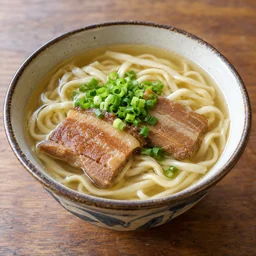
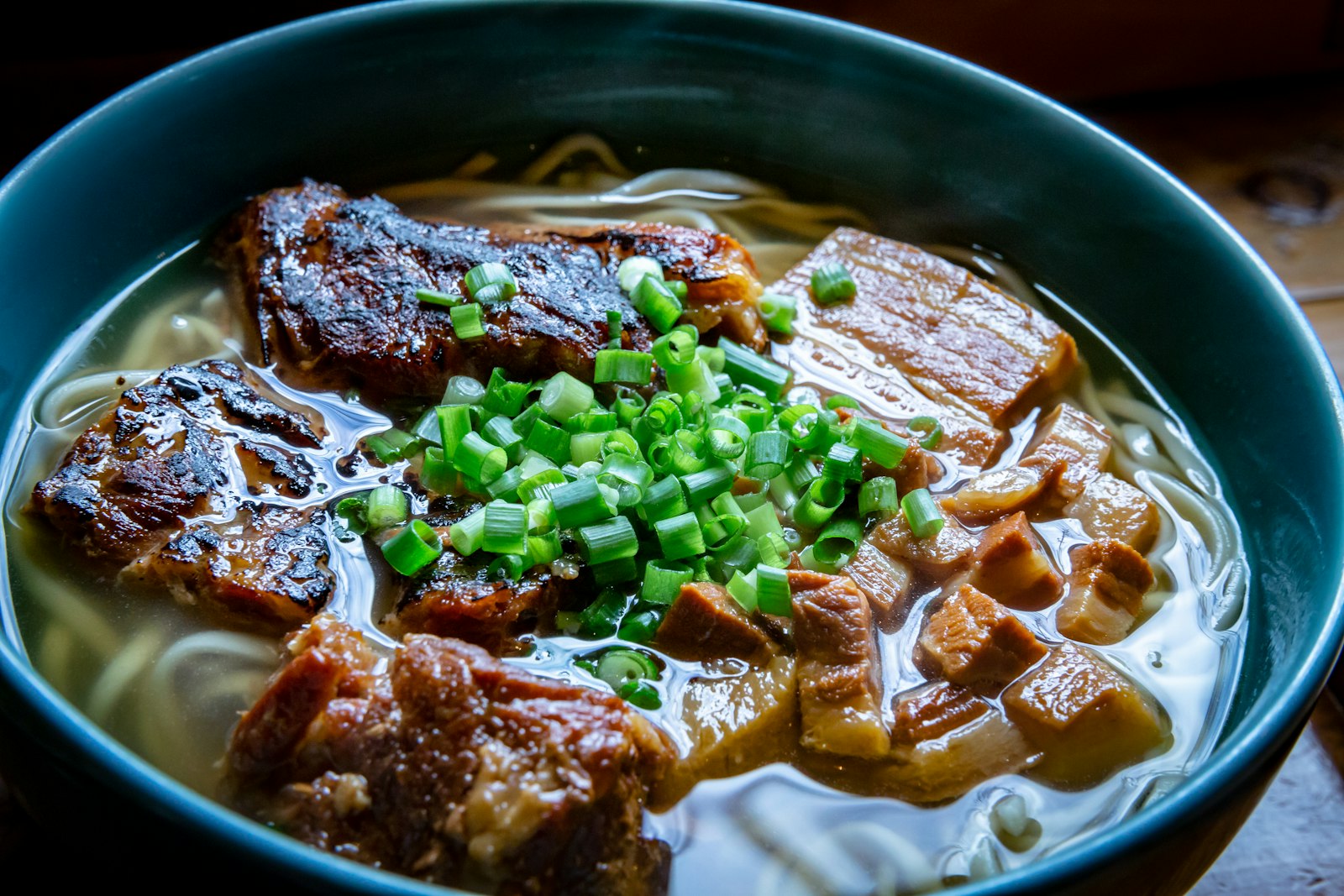
Heating. 7-Eleven says most of its stores in Japan have microwaves, but some items can't be heated in the store, so ask staff (as of October 2026, official site). If you're not sure whether something should be heated, ask "Atatamemasu ka?" yourself and let staff decide.
Hot counter. 7-Eleven's visitor FAQ mentions hot snacks, oden (a simmered dish), smoothies and its SEVEN CAFÉ coffee. It points visitors to its own how-to videos for ordering them.
Okinawa favorites
Some things on konbini shelves are more Okinawan than Japanese. Lawson says certain products are sold only in some regions and can end without notice (as of October 2026, official site). So treat this as a list of names to look for, not a promise:
- Pork tamago onigiri (a pork and egg rice ball)
- Sanpin-cha (a bottled tea)
- Chinsuko (a packaged Okinawan sweet)
- Blue Seal ice cream: Blue Seal describes itself as an ice cream specialist born in America and raised in Okinawa (as of October 2026, official site, Japanese).
We haven't yet confirmed on each chain's official site which of these they sell now, or more about each one, so we give no prices or descriptions here (unconfirmed). We also don't show packaging or logos.
Trash, eat-in and manners
Eat-in corners. Some 7-Eleven stores have an eat-in area. If you eat food there that was bought at the lower take-out tax rate, it's taxed at 10% instead. 7-Eleven also asks customers not to stay long or talk loudly (as of October 2026, official site). Tell staff if you plan to eat in.
Trash. 7-Eleven asks you to throw trash away according to each store's rules. Bins and their labels can differ by store, so read the signs on the bins.
Other services vary too. 7-Eleven lists tax-free shopping, eat-in areas, package sending and currency exchange machines as things only some stores offer.
When to go
Konbini are useful all year. The season changes what you'll want from them.
- Summer heat: Naha's average daily high is about 32°C (89°F) in July and August, per the Japan Meteorological Agency. Cold water is the obvious buy.
- Typhoons: most often in August and September, according to the agency. Stock up on water and snacks before a storm, and follow the Japan Meteorological Agency for warnings, not other forecasts.
- Cooler months: from November to March the average high is about 20°C to 25°C (68°F to 77°F), and the hot counter by the register gets more use.
| Jan | Feb | Mar | Apr | May | Jun | Jul | Aug | Sep | Oct | Nov | Dec | |
|---|---|---|---|---|---|---|---|---|---|---|---|---|
| Avg high | 68°20°C | 68°20°C | 71°22°C | 76°24°C | 81°27°C | 86°30°C | 89°32°C | 89°32°C | 87°31°C | 83°28°C | 77°25°C | 71°22°C |
| Avg low | 59°15°C | 59°15°C | 62°17°C | 66°19°C | 72°22°C | 77°25°C | 81°27°C | 80°27°C | 78°26°C | 74°24°C | 69°20°C | 62°17°C |
| Rain | 4.0"102mm | 4.5"114mm | 5.6"143mm | 6.3"161mm | 9.7"245mm | 11.2"284mm | 7.4"188mm | 9.4"240mm | 10.8"275mm | 7.1"179mm | 4.7"119mm | 4.3"110mm |
| Typhoons | – | – | – | – | 0.4 | 0.6 | 1.5 | 2.2 | 1.9 | 1.1 | 0.3 | – |
| Rainy season | ● | ● | ||||||||||
| Box jellyfish | ● | ● | ● | ● | ||||||||
| Golden Kings | ● | ● | ● | ● | ● | ● | ● | ● |
- Typhoons: about 7.7 a year come near Okinawa, most in August and September. Flights and ferries can stop for a day or two — keep your plans flexible in late summer.
- Rainy season: around May 10 to around June 21 in a typical year.
- Swimming: Swim at managed beaches during their swimming season, when lifeguards keep watch and nets are set against box jellyfish. Many beaches have neither. Check the beach's official page before you go.
- Box jellyfish: advisory June 1 – September 30 (2026); most stings in July and August; swim inside the nets and cover your legs.
- Basketball: B.LEAGUE season runs fall to spring, with playoffs in May.
- The nonstop: United's SFO–Naha nonstop starts March 27, 2027, three times a week. Some reports say it is seasonal; that is not confirmed yet.
Climate: Japan Meteorological Agency, Naha climate normals 1991–2020. Typhoons: JMA normals. Jellyfish: Okinawa Prefecture, box jellyfish advisory. Checked 2026-10-10.
Official info
- Seven Bank (ATMs in 7-Eleven stores): sevenbank.co.jp
- 7-Eleven Japan, for visitors: sej.co.jp
- FamilyMart, for visitors: family.co.jp
- Lawson, for visitors: lawson.co.jp
- Naha Airport, banks and ATMs: naha-airport.co.jp
Next:
- Plan cash, cards and tipping with our money guide.
- Sort out data before you fly with our eSIM, phone and Wi-Fi guide.
- Get from the terminal to your hotel with our Naha Airport to your hotel guide.
- Plan your arrival evening with your first night off the SFO flight.
- New to the islands? Start with Okinawa 101.
Sources
- Seven Bank — cash cards and credit cards issued overseas (how to use)
- Seven Bank — overseas cards usable at ATMs and service hours
- Seven Bank — international cards at Seven Bank ATMs
- 7-Eleven Japan — in-store payment
- 7-Eleven Japan — FAQ for visitors
- FamilyMart — for visitors to Japan
- FamilyMart — ATMs start in Okinawa FamilyMart stores (June 21, 2010, Japanese)
- FamilyMart — E-net ATMs start taking Visa, Mastercard and JCB cards issued abroad (April 26, 2016, Japanese)
- Lawson — Welcome to Japan
- Naha Airport — bank and ATM
- Blue Seal — official site (Japanese)
- Japan Meteorological Agency — Naha climate normals 1991–2020
- Japan Meteorological Agency — typhoon normals
- Federal Reserve H.10 via FRED — USD/JPY