Battle of Okinawa Sites: Peace Memorial Park, Himeyuri and the Navy Underground HQ
In 1945 the Battle of Okinawa took more than 200,000 lives. Here is what happened, what each memorial in the south tells you, and how to plan a quiet day there — hours, fees, the June 23 Memorial Day and how to look for a name on the Cornerstone of Peace.
- Peace Memorial Museum
- 9:00–17:00, closed Dec 29 – Jan 3, adults ¥300 (about $1.90)
- Himeyuri Peace Museum
- 9:00–17:25, open daily, adults ¥450 (about $2.85)
- Cornerstone of Peace
- 242,659 names, 14,012 of them from the United States (figures dated June 23, 2026
- June 23
- Okinawa Memorial Day, with a memorial ceremony in the park
- Best time
- a weekday from November to April, away from typhoons
You walk out onto the Peace Plaza at the southern tip of Okinawa's main island, and the Pacific is in front of you. Around you, stone walls fan out in arcs, row after row. They carry the names of the people who died in the Battle of Okinawa, whatever side they were on. More than 14,000 of the names are American.
This guide is for travelers who want to understand what happened here in 1945, and to visit the memorials in the south with care. It covers the history in brief, what each site shows, hours and fees, and how to plan the day.
- Veterans' and military families
- Travelers who want to understand Okinawa beyond the beaches
- Anyone planning a day in the south
- 200,000+People who died in the battle, by the prefectural museum's count
- 100,000+Of them, local civilians, by the same count
- 242,659Names on the Cornerstone of Peace (June 23, 2026)
- 14,012Of those names, from the United States
As of November 2026, Okinawa Prefecture and the Okinawa Prefectural Peace Memorial Museum
A note on the Peace Memorial Museum. The prefecture is preparing to renew the museum's exhibitions. It finished the basic design on September 4, 2026, but no closure dates had been announced when we checked (as of November 2026, official site). Check the museum's news before you go.
What happened here
The Japanese Army's 32nd Army, the force that defended Okinawa, was set up on March 22, 1944. On March 26, 1945, U.S. forces landed on the Kerama Islands, west of the main island. The prefecture uses that day as the start of the Battle of Okinawa.
The Okinawa Prefectural Peace Memorial Museum describes about 90 days of fighting from late March. People in Okinawa call it the "Typhoon of Steel." The museum puts the dead at more than 200,000. More than 100,000 of them were local civilians, more than the military dead, the museum says.
The museum lists how civilians died: in the shelling, by suicide, from hunger and malaria, and at the hands of retreating Japanese troops. The fighting also destroyed much of the island's cultural heritage. The prefecture's records date the formal end in Okinawa to September 7, 1945, when the surrender document was signed.
- Mar 22, 1944The Japanese 32nd Army is set up to defend Okinawa.
- Mar 26, 1945U.S. forces land on the Kerama Islands.
- Late Mar 1945 onAbout 90 days of fighting.
- Sep 7, 1945The surrender document is signed.
As of November 2026, Okinawa Prefecture and the Okinawa Prefectural Peace Memorial Museum
Today, June 23 is Okinawa's Memorial Day, with a memorial service in Peace Memorial Park. The prefectural museum sets out to show the war through the experiences of the people of Okinawa, and that is the view you'll meet at these sites.
Okinawa Peace Memorial Park
The park lies on Mabuni in Itoman City, in the far south. Okinawa Prefecture owns it, and the Okinawa Prefectural Peace Memorial Foundation runs it. These are the main places inside:
- Okinawa Prefectural Peace Memorial Museum
- The Cornerstone of Peace
- Okinawa Peace Memorial Hall, with a large statue
- The National Okinawa War Dead Cemetery
- The memorial towers that prefectures across Japan set up for their own dead
The Peace Memorial Museum
Okinawa Prefecture opened the museum in 1975. Its aim is to mourn the dead, pass on the lessons of the battle, and show the war through the experiences of the people of Okinawa.
The building itself is free to enter. You pay only for the permanent exhibition. The museum lends free audio guides in ten languages, English included, to use inside (about 20 sets).
The museum's pages don't say how you can pay for the exhibition (cash, cards or e-money), so that is unconfirmed. If it matters to you, ask the museum (098-997-3844).
The Cornerstone of Peace
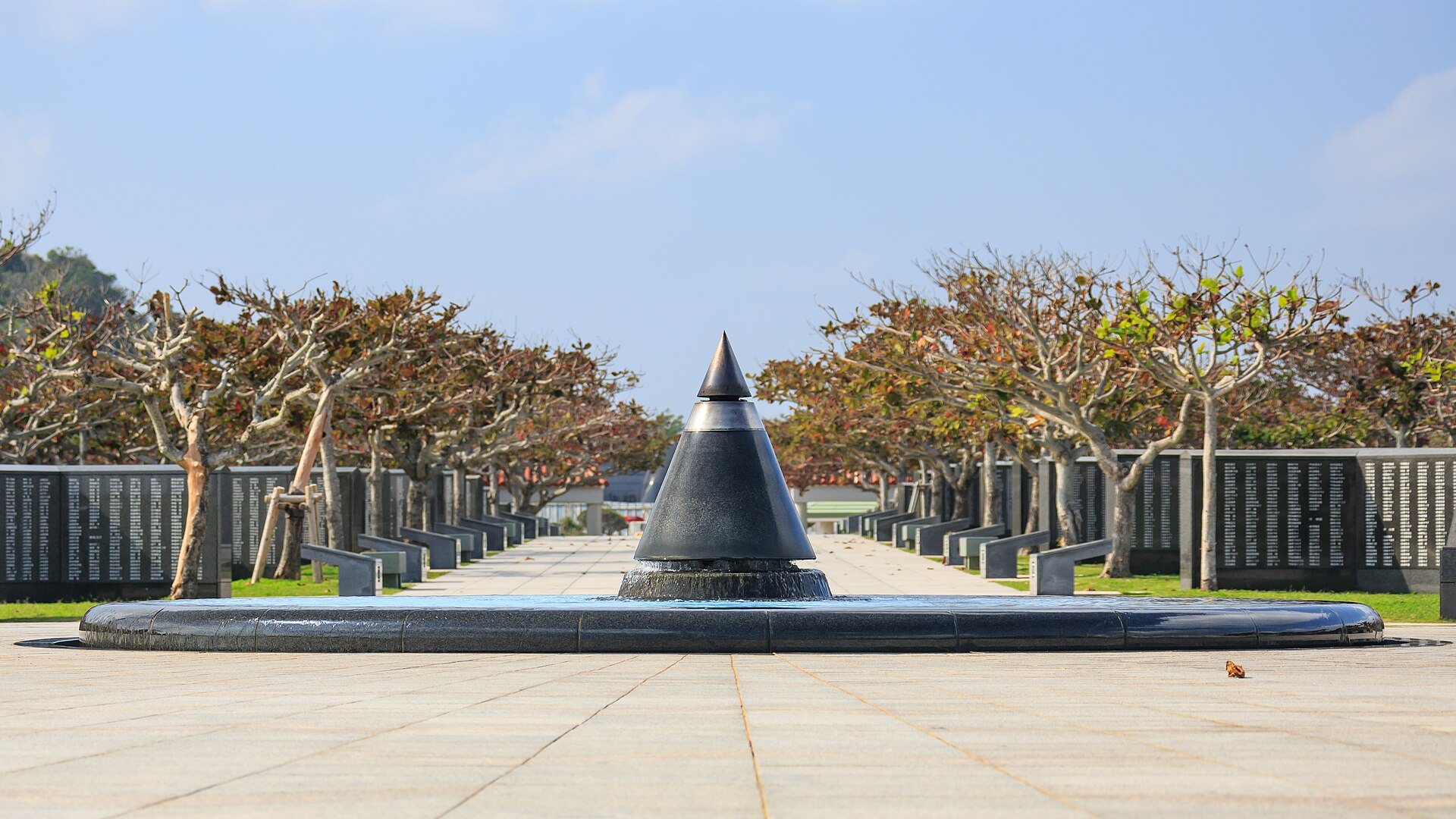
The prefecture built the Cornerstone of Peace in 1995, for the 50th anniversary of the end of the war. It was completed on June 23, 1995, the park says. Its rule is simple: the names of all who died in the Battle of Okinawa, regardless of nationality, military or civilian.
The walls spread out in arcs from the round Peace Plaza toward the sea. At the center burns a flame that joins fire from Aka Island in Zamami Village, where U.S. forces first landed, with flames from Hiroshima and Nagasaki. The main path lines up with the sunrise on June 23, the prefecture says.
- 149,703Names from Okinawa Prefecture
- 78,365From other prefectures of Japan
- 14,012From the United States
- 579From the UK, Taiwan, North Korea and South Korea
As of November 2026, Okinawa Prefecture (figures dated June 23, 2026)
The totals are not the same as the battle's death toll. For people from Okinawa, the prefecture also inscribes those who died in war from 1931 onward, at home or abroad. The list grows a little every year (figures dated June 23, 2026; all checked as of November 2026, Okinawa Prefecture).
American names on the Cornerstone. As of June 23, 2026, 14,012 names from the United States are on the walls, the prefecture says. The U.S. government supplied the list. Each name is carved in the person's own language, grouped by country, so American names are in English. The park says the zone for people from other countries is at the far end of the side path on the right.
Looking for a name. The prefecture runs an online search for the inscriptions; search for "Heiwa no Ishiji inscription search" on the Okinawa Prefecture website. To ask about a name, contact the park's foundation (098-997-2765) or the prefecture's Peace Promotion Division (098-894-2226). Families can also apply to add a name; the prefecture asks for papers to reach it by about the end of November, with a decision around March or April (all as of November 2026, official sites).
Peace Memorial Hall
The hall holds the Okinawa Peace Memorial Statue, 12 m (39 ft) tall and about 8 m (26 ft) wide. The sculptor, Yamada Shinzan, spent more than 18 years on its original model, the park says.
Himeyuri Peace Museum
The Himeyuri Peace Museum is in the Ihara district of Itoman, on the grounds of the Himeyuri Tower memorial. The Himeyuri Alumnae Association founded it, and it opened on June 23, 1989.
The Himeyuri Student Corps came from two schools: the Okinawa Female Normal School and the Okinawa Prefectural Girls' First High School. Soon after the battle began, the students were sent to the Okinawa Army Hospital to work, at the risk of their lives. The museum counts 240 students and teachers in the corps, and 136 of them died.
One room, called Requiem, remembers 227 students and teachers who died, with their photos and names. That figure is the 136 from the corps plus 91 other students and teachers, the museum's FAQ explains (as of November 2026, official site).
The six exhibits move from school life before the war to the battlefield, survivors' testimony on video, and the survivors' lives after the war. Panels are in Japanese and English, and the videos have English subtitles. Most visitors spend 30 minutes to an hour, the museum says, and some stay two or three hours.
You can visit the Himeyuri Tower itself even when the museum is closed.
Former Japanese Navy Underground Headquarters
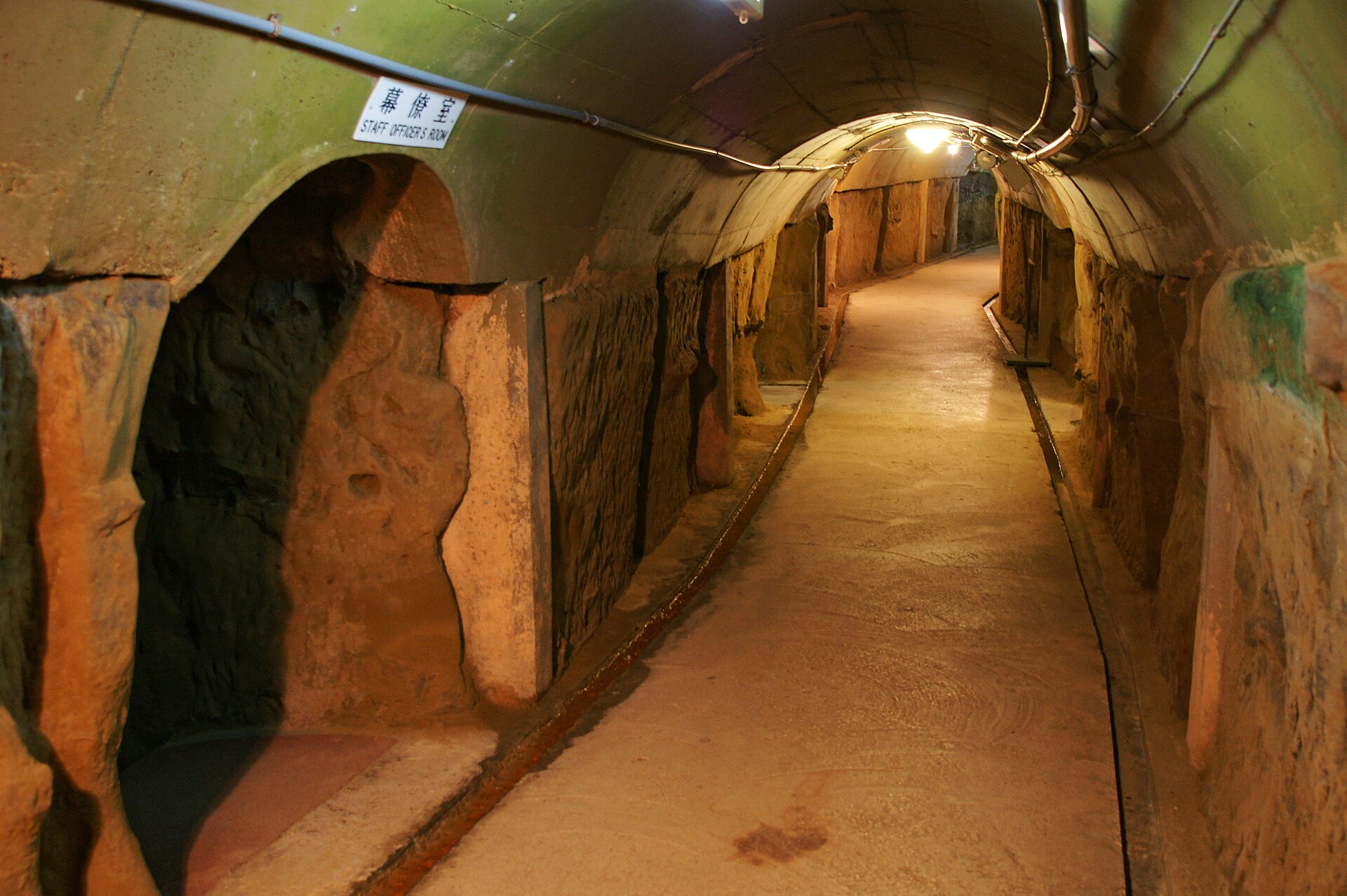
Photo: 663highland, CC BY 2.5, via Wikimedia Commons
The Former Japanese Navy Underground Headquarters is inside Kaigungo Park, which spans part of Naha and Tomigusuku City. The prefecture's park page says the Japanese Navy had its headquarters here at the end of the Pacific War. Many officers and men died inside the tunnels.
Naha City describes the tunnels this way. A Japanese Navy construction unit dug them in 1944 to defend the Navy's Oroku airfield, today's Naha Airport. They are said to have run about 450 m (1,480 ft), and about 4,000 soldiers were housed inside. In March 1970, about 300 m (980 ft) around the commander's room was restored, and a small exhibit room shows items found in the tunnels and letters to families.
Hours and admission are unconfirmed. The prefecture's park page lists hours of 9:00 am to 5:00 pm (last entry 4:30 pm) and admission of ¥600 for adults and ¥300 for children, but that page was last updated on January 11, 2024. We haven't found a newer official page, so call the park office (098-850-4055) before you go.
How to see them in one day
All three sites are in the south. A car gives you the most freedom. Driving here is on the left; read our guide to driving in Okinawa first. The Himeyuri Peace Museum says it is about 20 minutes by car from the Tomigusuku interchange of the airport expressway, and about 30–40 minutes from central Naha or Naha Airport. The park's access page doesn't give a driving time, and we found no official driving times between the three sites, so plan with a map app on the day.
By bus to Peace Memorial Park. It takes two buses, with a change in Itoman:
- StartNaha Bus Terminal
stop 3 at Naha Bus Terminal (the route's first stop)
- Bus 89Okinawa Bus / Ryukyu Bus Kotsu (joint)about 60 min¥670
More about this ride
Ride to the end of the line. Route 89 has a few variants with different stops on the way (one detours through Nishizaki), but all of them end at Itoman Bus Terminal. The ride takes about an hour, and longer in rush-hour traffic (as of October 2026, official timetable).
- Bus 82Ryukyu Bus Kotsutime unconfirmed¥540
More about this ride
Route 82 runs about once an hour, so check the next departure before you leave Naha. The fare is the one the Okinawa Prefectural Peace Memorial Museum lists (as of January 2026, official site; this may have changed since, so check the official site before you book or go). The bus company's own fare table and timetable could not be checked.
- Get offHeiwa Kinendo Iriguchi (Peace Memorial Hall entrance)
- Change hereHeiwa Kinendo Iriguchi bus stop
- Walkabout 5 min
More about this ride
About a 5-minute walk, according to the Peace Memorial Museum.
- Get offOkinawa Peace Memorial Park

For reference only. Travel times depend on traffic, and routes and fares change. Check the operator's official site before you go (as of October 2026, official sites).
By bus to Himeyuri. This also takes two buses, changing at Itoman Bus Terminal. Route 82 for the last leg doesn't run often, so check the next departure before you leave Naha:
- StartAsahibashi / Naha Bus Terminal stop
The roadside stop across the street from Naha Bus Terminal, in front of the Rokin building (the museum's advice). Route 89 also starts inside the terminal at stop 3, but from there it first loops through Kainan and comes back to this stop, which adds about 15–20 minutes.
- Bus 89Okinawa Bus / Ryukyu Bus Kotsu (joint)about 40 min¥670
More about this ride
Ride to the end of the line. About 40 minutes in the middle of the day, and closer to an hour at rush hour (as of November 2026, official timetable and fare table).
- Bus 82Ryukyu Bus Kotsutime unconfirmed¥320
More about this ride
This is the stop the museum's own access page tells you to use. The museum says this leg takes about 15–25 minutes; we could not find the bus company's timetable. Route 82 does not run often, so check the next departure before you leave Naha. Route 107 also goes to this stop, but it takes a long loop through the countryside. Going back: take Route 82 or 108 from the stop to Itoman Bus Terminal, then Route 89 to Naha (as of November 2026, official fare table and the museum's site).
- Get offHimeyuri no To Mae (Himeyuri Tower)
For reference only. Travel times depend on traffic, and routes and fares change. Check the operator's official site before you go (as of November 2026, official sites).
Taxi or a tour. The park puts a taxi from Naha Bus Terminal to Peace Memorial Park at about 18 km (11 miles) and about ¥3,500 (about $22) one way (as of November 2026, official site). For more on taxis and other ways to reach the south without a car, see Okinawa without a car. If you'd rather have a guide, our guide to choosing a tour explains what to check, such as whether admission and an English guide are included.
A simple plan. Go to Peace Memorial Park in the morning, since the museum's permanent exhibition stops admitting people at 4:30 pm. Then visit Himeyuri in the afternoon; it takes its last visitors at 5:00 pm (both as of November 2026, official sites). Leave extra time if you'd like to walk along the Cornerstone of Peace or find a name.
Visiting respectfully
These are places of mourning, and families still come here to pray. A few things the sites ask, plus common sense:
- Keep your voice down, and don't take phone calls in the exhibition rooms.
- Follow the photo rules. The Himeyuri museum bans photos in its exhibition rooms.
- No food or drink in the exhibition rooms at Himeyuri.
- Leave people who are praying alone. Don't photograph them.
- Watch for closed paths. In October 2026 the park posted that the path down from the Reimei Tower to the Kenji Tower on Mabuni Hill is closed.
When to go
June 23, Memorial Day. Okinawa Prefecture holds its memorial service for all the war dead in Peace Memorial Park. In 2026 it ran from 11:50 am to 12:50 pm, hosted by the prefecture and the prefectural assembly. Ordinary cars could not enter the park that day; the prefecture ran a free shuttle bus from its office in Naha and asked people to use public transport. Bags were checked at the entrance, and the prefecture asked everyone to keep a minute of silence at noon (all as of the 2026 service, Okinawa Prefecture). If you go that day, expect crowds and security.
The rest of the year. Summer is hot: Naha's average high is 31.9°C (89°F) in July, and you'll be walking outdoors in the park. The rainy season usually runs from around May 10 to around June 21. Typhoons come most often in August and September, and both the museums and the park can close when one approaches. From November to April average highs are 19.8–25.0°C (68–77°F) (Japan Meteorological Agency normals for 1991–2020). Remember that the Peace Memorial Museum closes from December 29 to January 3.
| Jan | Feb | Mar | Apr | May | Jun | Jul | Aug | Sep | Oct | Nov | Dec | |
|---|---|---|---|---|---|---|---|---|---|---|---|---|
| Avg high | 68°20°C | 68°20°C | 71°22°C | 76°24°C | 81°27°C | 86°30°C | 89°32°C | 89°32°C | 87°31°C | 83°28°C | 77°25°C | 71°22°C |
| Avg low | 59°15°C | 59°15°C | 62°17°C | 66°19°C | 72°22°C | 77°25°C | 81°27°C | 80°27°C | 78°26°C | 74°24°C | 69°20°C | 62°17°C |
| Rain | 4.0"102mm | 4.5"114mm | 5.6"143mm | 6.3"161mm | 9.7"245mm | 11.2"284mm | 7.4"188mm | 9.4"240mm | 10.8"275mm | 7.1"179mm | 4.7"119mm | 4.3"110mm |
| Typhoons | – | – | – | – | 0.4 | 0.6 | 1.5 | 2.2 | 1.9 | 1.1 | 0.3 | – |
| Rainy season | ● | ● | ||||||||||
| Box jellyfish | ● | ● | ● | ● | ||||||||
| Golden Kings | ● | ● | ● | ● | ● | ● | ● | ● |
- Typhoons: about 7.7 a year come near Okinawa, most in August and September. Flights and ferries can stop for a day or two — keep your plans flexible in late summer.
- Rainy season: around May 10 to around June 21 in a typical year.
- Swimming: Swim at managed beaches during their swimming season, when lifeguards keep watch and nets are set against box jellyfish. Many beaches have neither. Check the beach's official page before you go.
- Box jellyfish: advisory June 1 – September 30 (2026); most stings June to September; swim inside the nets and cover your legs.
- Basketball: B.LEAGUE season runs fall to spring, with playoffs in May.
- The nonstop: United's SFO–Naha nonstop starts March 27, 2027, three times a week. Some reports say it is seasonal; that is not confirmed yet.
Climate: Japan Meteorological Agency, Naha climate normals 1991–2020. Typhoons: JMA normals. Jellyfish: Okinawa Prefecture, box jellyfish advisory. Checked 2026-10-10.
Dollar figures use ¥156.87 per $1 (as of October 23, 2026, Federal Reserve). Treat them as rough.
Combine with the south
The south has more than war memorials. Sefa-utaki, the most sacred site of the old Ryukyu Kingdom, is in neighboring Nanjo City; see our Sefa-utaki guide. For where the south fits in a longer trip, see the 5-day itinerary from SFO. Visiting family on base? Our guide for military families covers the basics.
Official info

- Okinawa Prefectural Peace Memorial Museum (English)
- Okinawa Prefectural Peace Memorial Museum, latest news (Japanese)
- Okinawa Prefectural Peace Memorial Park (Japanese)
- Himeyuri Peace Museum (English)
- Okinawa Prefecture website: Cornerstone of Peace pages and the online name search (Japanese)
Sources
- Okinawa Prefectural Peace Memorial Museum — English page
- Okinawa Prefectural Peace Memorial Museum — official site, news and exhibition renewal (Japanese)
- Okinawa Prefectural Peace Memorial Museum — visitor information (Japanese)
- Okinawa Prefecture — Peace Memorial Museum exhibition renewal (Japanese)
- Okinawa Prefectural Peace Memorial Park (Okinawa Prefectural Peace Memorial Foundation) — official site (Japanese)
- Okinawa Prefectural Peace Memorial Park — access (Japanese)
- Okinawa Prefectural Peace Memorial Park — Peace Memorial Hall (Japanese)
- Okinawa Prefectural Peace Memorial Park — Cornerstone of Peace (Japanese)
- Okinawa Prefecture — Cornerstone of Peace: names inscribed, as of June 23, 2026 (Japanese)
- Okinawa Prefecture — Cornerstone of Peace: basic policy for inscription (Japanese)
- Okinawa Prefecture — Cornerstone of Peace: purpose, principles and design (Japanese)
- Okinawa Prefecture — Cornerstone of Peace: inquiries about inscriptions (Japanese)
- Okinawa Prefecture — 2026 Okinawa Memorial Service for All War Dead (Japanese)
- Okinawa Prefecture — Kaigungo Park (Japanese)
- Naha City — Former Japanese Navy Underground Headquarters (Japanese, PDF)
- Himeyuri Peace Museum — official site (English)
- Himeyuri Peace Museum — visitor information (English)
- Himeyuri Peace Museum — about the museum (English)
- Himeyuri Peace Museum — exhibitions (English)
- Himeyuri Peace Museum — FAQ (English)
- Himeyuri Peace Museum — closures when typhoons approach (Japanese)
- Japan Meteorological Agency — Naha climate normals (Japanese)
- Japan Meteorological Agency — typhoon normals (Japanese)
- Japan Meteorological Agency — rainy season normals (Japanese)
- Federal Reserve H.10 via FRED — USD/JPY