Visiting Family Stationed in Okinawa: Base Access, Where to Stay and Trip Planning
Flying out to see a son, daughter or spouse stationed on Okinawa? Who arranges your base access, why most visitors sleep off base, how to get from Naha Airport, and what to plan together outside the gates.
- Naha Airport to Kadena
- about 45 min to 1.5 h by road
- Best time
- when your sponsor has time off


You land at Naha Airport, and somewhere on the drive north your son, daughter or spouse is waiting at a gate you've only seen in photos. Getting you through that gate is something to sort out with the person you came to see, and it's worth starting weeks before you fly.
This guide covers what your family member handles, why most visitors sleep off base, how to get from the airport, and what to do together outside the gates. This site is not affiliated with the US military. We use the names of bases and services only to describe them, and base rules always come from the base.
- Parents and grandparents visiting someone stationed on Okinawa
- Spouses and partners coming over for a few weeks
- Families planning a first trip on the new SFO–Naha nonstop
- About 70%Share of the land used only by US forces in Japan that lies in Okinawa
- About 15%Share of Okinawa's main island those facilities cover
- 45 min–1.5 hNaha Airport to Kadena Air Base by road, depending on traffic
- Aug–SepThe months typhoons come closest to Okinawa most often


As of October 2026; Okinawa Prefecture, Military OneSource and Japan Meteorological Agency official sites
Your family member is your sponsor
Visitors to a base are usually sponsored by someone with base access, and that's normally the person you're visiting. What the sponsor has to do, and what you have to bring, is set by each base. We couldn't confirm those steps on an official page, so treat this as unconfirmed and ask your sponsor.
Each base has its own pass office. Okinawa has bases run by different US services, such as Kadena Air Base (Air Force) and Marine Corps camps like Camp Foster, so the steps can differ. The first two questions to ask are simple:
- Which base or camp will you visit?
- Which gate should you use, and where will they meet you?
Your sponsor arranges your access. The steps, documents and lead times come from the base's pass office, so check them there:
- Kadena Air Base: Pass and Registration
- Marine Corps camps: Camp Butler Pass Office
We couldn't open those pages when we checked in October 2026, so we don't list documents, lead times or office hours here.
Before you fly: a checklist to send your sponsor
Copy these questions into a message to your family member. Every answer should come from their base, not from us.
- What does the pass office need from me, and how far ahead do you need it?
- Which photo ID should I bring to the gate? (Bring your US passport either way; you'll need it to enter Japan.)
- Can I come and go on my own, or must you escort me the whole time?
- Can kids, or anyone under 18, get a pass? What ID do they need?
- If I rent a car, can I drive it onto base, and are there extra rules?
- Who do I call if I'm stuck at the gate?
You'll enter Japan as an ordinary visitor, not under the US–Japan Status of Forces Agreement (SOFA), so the usual entry steps apply to you. Our entry checklist covers the visa-free stay, Visit Japan Web, customs and Japan's strict medicine rules.
Staying on base vs. off base
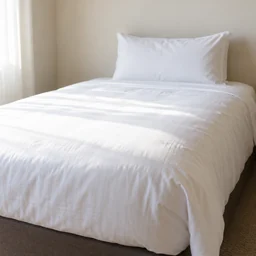
Plan to sleep off base. On-base lodging exists, but it's set up for people with military ID cards, and families moving to the island get first call on it.
| On-base lodging | Off-base hotel | |
|---|---|---|
| Who can book | Eligible patrons hold a valid military-issued ID card. Ask the lodge about guests | Anyone |
| Priority | Families on a permanent change of station (PCS) move come first; others as space allows | No priority rules |
| Busy months | May to September often has shortages | Ask each hotel |
| Getting onto base | You still need base access | You still need base access each time |
| Where to book | Through the lodge (links below) | The hotel |
(Table: the on-base column is for the Marine Corps camps, as of October 2026, Military OneSource. Kadena's rules may differ.)
If your sponsor wants to try on base, these are the official lodging pages. Whether visiting family can book without a military ID is unconfirmed, so have your sponsor ask the lodge directly.
- Kadena Air Base: the Shogun Inn, run by the base's Force Support Squadron
- Camp Foster (Marine Corps): Inns of the Corps Camp Foster, run by Marine Corps Community Services (MCCS)
Off base, start with Chatan. It sits between Naha and the resort coast, and American Village there is a common place to meet up. But the right area depends on which base your family member is at. Ask before you book, then compare drive times on a map. Our where to stay guide compares the four main areas, and our American Village guide covers what's there.
Getting from Naha Airport
Naha Airport is in the south of the main island, and most bases are in the middle and north. Military OneSource gives these points for Kadena (as of October 2026, Military OneSource):
- Drive time: about 45 minutes to 1.5 hours from Naha Airport, depending on traffic.
- No shuttle: there's no shuttle service from Naha to Kadena.
- Taxis: a taxi can only enter the base if it's authorized. Look for "Authorized on Base" painted on the rear. Most drivers take only yen, and few take cards.
The easiest plan is for your sponsor to meet you at the airport. If you're staying off base in Chatan, there's a direct bus from the airport:

- StartDomestic Passenger Terminal stop
stop 5, 1st floor: go out of the domestic arrivals lobby; the stop is on the curb in front of it, toward the international terminal side
- Bus 120Okinawa Bus / Ryukyu Bus Kotsu (joint)about 70 min¥900
More about this ride
About 55 to 80 minutes by the timetable, depending on the time of day and the route through Naha. The walk from the stop to the shops is not confirmed here.
- Get offMihama American Village Iriguchi

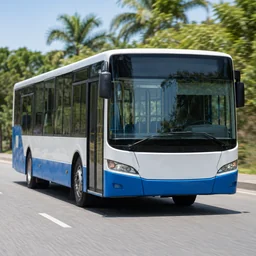
For reference only. Travel times depend on traffic, and routes and fares change. Check the operator's official site before you go (as of October 2026, official sites).
To go straight to a base gate, the simple options are a rental car picked up at the airport (see Driving as a visitor below) or a taxi. Ask your sponsor which gate to use and where to meet, since only an authorized taxi can drive onto the base. We don't give bus routes to the gates, because we haven't checked them. Our airport guide compares the monorail, buses, taxis and rental cars by area.
Driving as a visitor

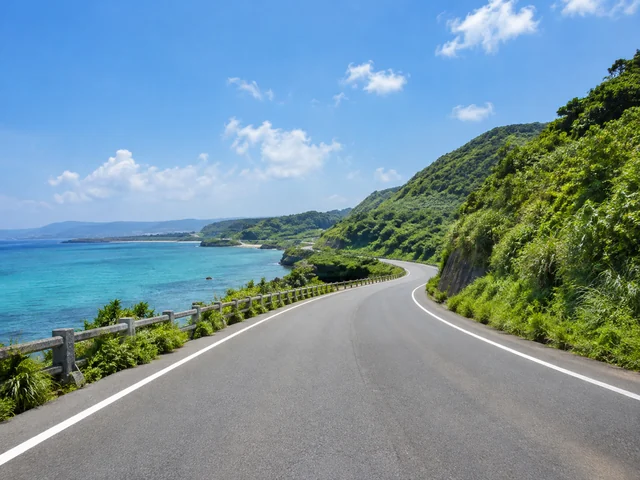
To drive in Japan, you need an International Driving Permit from the US under the 1949 Geneva Convention, plus your US license and passport. Our driving guide explains how to get one and how Japan's roads differ from home.
On base, the base's rules apply. Your sponsor knows whether you can bring a rental car through the gate and what rules apply inside. Off base, Japanese traffic law applies to everyone.
Things to do together off base
The best part of the trip happens outside the gate. A few ideas that work for families with a local guide in the car:
- American Village in Chatan: shops and places to eat by the sea. See our American Village guide.
- A Ryukyu Golden Kings game: Okinawa's pro basketball team plays in the Koza area of Okinawa City from October to May. See our Kings guide.
- A day up north: the Churaumi Aquarium and the Motobu Peninsula. See our Churaumi and Motobu day trip.
Respecting your hosts
The bases are part of daily life in Okinawa, and not always an easy part. Okinawa Prefecture says that about 70% of the land used only by US forces in Japan lies in the prefecture. It lists aircraft accidents, noise, fuel leaks and crimes by US service members among the problems residents face (as of October 2026, Okinawa Prefecture).
Many residents feel strongly about this, in different ways. You don't need to take a side to be a good guest. Be polite and patient, keep the noise down near homes at night, and follow Japanese law off base. For the history, see Okinawa 101.
When to go, and typhoon days
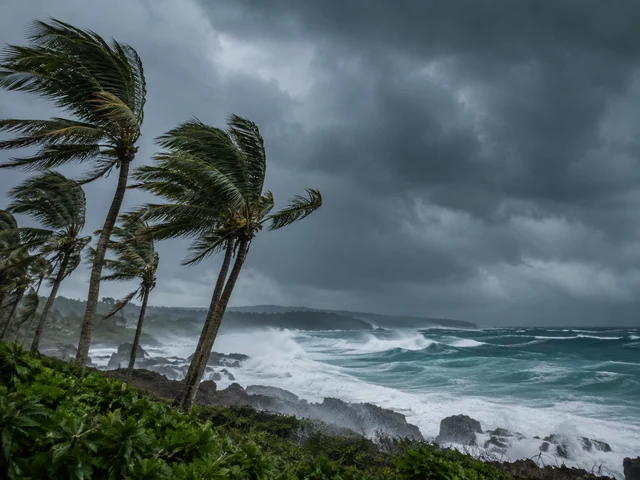
Typhoons come closest to Okinawa most often in August and September, with July close behind (Japan Meteorological Agency, 1991–2020 averages). A storm can cancel flights and close roads for a day or more.
Bases have their own storm procedures, which can change what your family member can do and where they can go. Ask your sponsor how their base shares storm information, and follow the base's official announcements. We don't publish military storm conditions. For the storm itself, follow the Japan Meteorological Agency. Our typhoon season guide explains what to do.
| Jan | Feb | Mar | Apr | May | Jun | Jul | Aug | Sep | Oct | Nov | Dec | |
|---|---|---|---|---|---|---|---|---|---|---|---|---|
| Avg high | 68°20°C | 68°20°C | 71°22°C | 76°24°C | 81°27°C | 86°30°C | 89°32°C | 89°32°C | 87°31°C | 83°28°C | 77°25°C | 71°22°C |
| Avg low | 59°15°C | 59°15°C | 62°17°C | 66°19°C | 72°22°C | 77°25°C | 81°27°C | 80°27°C | 78°26°C | 74°24°C | 69°20°C | 62°17°C |
| Rain | 4.0"102mm | 4.5"114mm | 5.6"143mm | 6.3"161mm | 9.7"245mm | 11.2"284mm | 7.4"188mm | 9.4"240mm | 10.8"275mm | 7.1"179mm | 4.7"119mm | 4.3"110mm |
| Typhoons | – | – | – | – | 0.4 | 0.6 | 1.5 | 2.2 | 1.9 | 1.1 | 0.3 | – |
| Rainy season | ● | ● | ||||||||||
| Box jellyfish | ● | ● | ● | ● | ||||||||
| Golden Kings | ● | ● | ● | ● | ● | ● | ● | ● |
- Typhoons: about 7.7 a year come near Okinawa, most in August and September. Flights and ferries can stop for a day or two — keep your plans flexible in late summer.
- Rainy season: around May 10 to around June 21 in a typical year.
- Swimming: Swim at managed beaches during their swimming season, when lifeguards keep watch and nets are set against box jellyfish. Many beaches have neither. Check the beach's official page before you go.
- Box jellyfish: advisory June 1 – September 30 (2026); most stings June to September; swim inside the nets and cover your legs.
- Basketball: B.LEAGUE season runs fall to spring, with playoffs in May.
- The nonstop: United's SFO–Naha nonstop starts March 27, 2027, three times a week. Some reports say it is seasonal; that is not confirmed yet.
Climate: Japan Meteorological Agency, Naha climate normals 1991–2020. Typhoons: JMA normals. Jellyfish: Okinawa Prefecture, box jellyfish advisory. Checked 2026-10-10.
The fewest typhoons come from December to April (same JMA averages). Your sponsor's work schedule matters as much as the weather, so pick dates with them first.
Official info

- Kadena Air Base — Pass and Registration: kadena.af.mil
- Marine Corps Base Camp Butler — Pass Office: mcbbutler.marines.mil
- Military OneSource — Kadena AB overview: installations.militaryonesource.mil
- Kadena Air Base — Shogun Inn: kadenafss.com
- MCCS Okinawa — Inns of the Corps Camp Foster: okinawa.usmc-mccs.org
Next: book the flight with our SFO–Naha nonstop guide, then sort your documents with the entry checklist.
Sources
- Military OneSource — Kadena AB in-depth overview (arrival, transportation, taxis)
- Military OneSource — Marine Corps camps on Okinawa, temporary housing
- Kadena Air Base 18th Force Support Squadron — Shogun Inn lodging
- MCCS Okinawa — Inns of the Corps Camp Foster
- Okinawa Prefecture — US military bases in Okinawa (kids' page, Japanese)
- Japan Meteorological Agency — typhoon normals