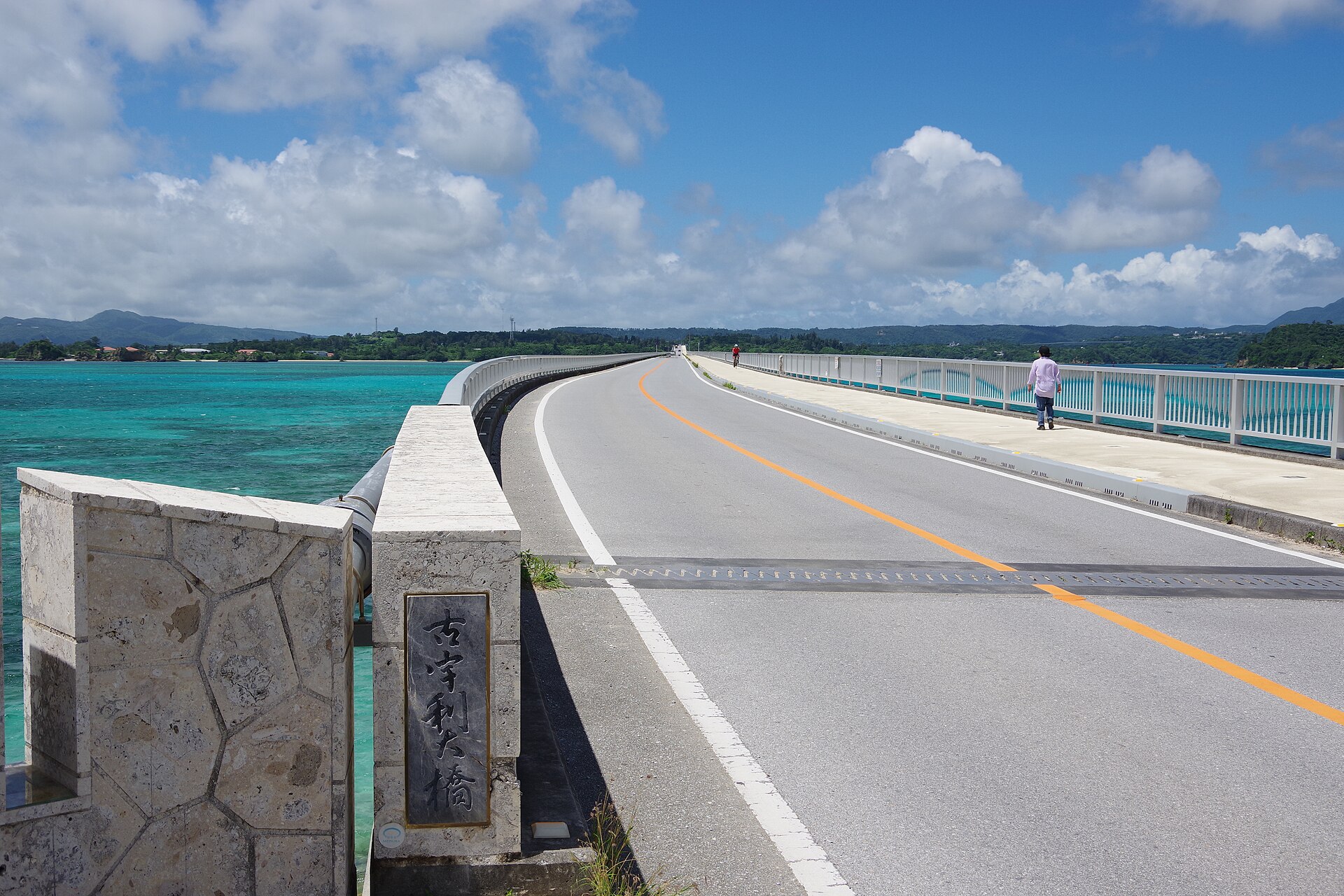
Okinawa in Typhoon Season: What to Know Before You Book a Summer Trip
Booking Okinawa for summer or early fall? See when typhoons come, what a storm day does to flights and plans, what to check before you pay, and where to get official updates.
- Typhoon months
- July to September (August peak)
- Average year
- 7.7 typhoons come near Okinawa
- Before you book
- read the cancellation and change rules for flight, hotel, tours and car
- During a storm
- stay in and follow the Japan Meteorological Agency and your airline
- Best time
- December to April for the fewest typhoons

You've found the August fares and the beach hotel has rooms. Then you notice the dates sit right in the middle of Okinawa's typhoon season. In an average August, 2.2 typhoons come near the Okinawa region, more than in any other month.
This guide won't tell you to skip summer. It shows when storms come, what a storm day means for a visitor, and what to check before you pay for anything.
- Families booking a July–September beach trip
- Travelers on the new SFO–Naha nonstop planning a summer visit
- Anyone visiting family stationed in Okinawa during storm season
- 7.7Typhoons that come near Okinawa in an average year
- 2.2The August average, the peak month
- Jul–SepThe three busiest months, with 5.6 of the 7.7
- 0Typhoons near Okinawa from January to March in 1991–2020


As of October 2026, Japan Meteorological Agency 1991–2020 normals
When typhoons come
The Japan Meteorological Agency (JMA) counts a typhoon as "approaching" when its center comes within 300 km (about 190 miles) of any JMA weather station in the region. Here are its averages for the Okinawa region:
| Month | Average typhoons near Okinawa |
|---|---|
| May | 0.4 |
| June | 0.6 |
| July | 1.5 |
| August | 2.2 |
| September | 1.9 |
| October | 1.1 |
| November | 0.3 |
| December to April | 0.0 or none |
Source: JMA typhoon normals, 1991–2020. An average is not a forecast. One August can bring none, and another can bring several.
What this means for booking. A July to September trip has the best beach weather and the highest typhoon odds. October still averages about one. If storms worry you more than water temperature, look at our month-by-month guide.
What a typhoon day looks like for a visitor
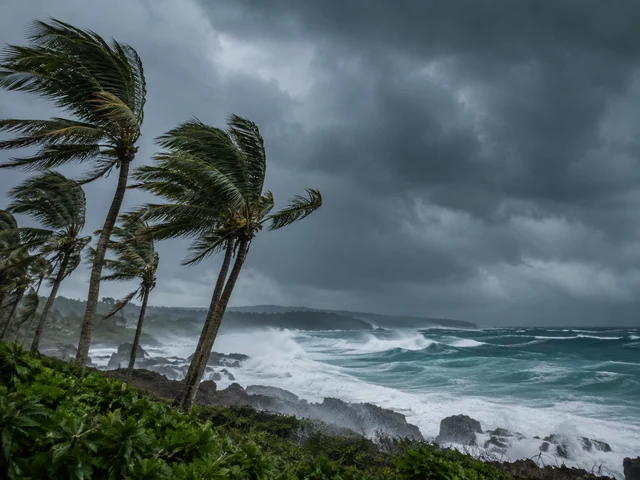
A typhoon close to Okinawa can shut down most of the things a trip depends on, usually for a day or two.
The airport can close. On August 7, 2026, Naha Airport closed both its domestic and international terminals for the whole day as Typhoon No. 13 approached. Reopening the next day depended on the weather and flight operations (Naha Airport notice, August 6, 2026). The airport told passengers to check flight status with their airline.
Ferries, buses and tours. Boat trips to the outer islands, buses, the monorail and outdoor tours each make their own call on a storm day. Check each operator's notices on the day, and don't assume a tour will run because your booking is still showing. The Yui Rail monorail shows its current operating status on its home page (Japanese).
Power and shops. Strong storms can cut power. Okinawa Electric Power runs an outage page with a map by town (Japanese). Plan as if you won't be able to go out for food on the worst day.
Before you book
Most of the protection you get against a storm is decided when you pay. Before you book, read the cancellation and change rules for each piece of the trip.
Keep a buffer day. If your trip ends in a connection to a cruise, a work meeting or another flight, don't make it a same-day connection in typhoon season.
Airline notices. Airlines post their own notices when a storm affects flights. United lists them on its travel alerts page. In the waivers we saw there on October 23, 2026, United let affected customers move to another United flight within set dates without a change fee or fare difference. Each waiver sets its own dates, cabin and routes, so read the one for your storm (as of October 2026, official site).
If the airline cancels. The U.S. Department of Transportation says you're entitled to a refund if an airline cancels your flight for any reason, or significantly delays or changes it, and you choose not to travel or not to take a credit or voucher instead (as of October 2026, DOT refunds page). Hotels, tours and rental cars follow their own rules, so check those separately.
Travel insurance: read the delay and cancellation terms
We don't recommend any insurance company or plan. If you're thinking about trip insurance for a summer trip, these are the parts to read closely in the policy wording, not only the summary:
- Cancellation: Does the policy pay if a typhoon cancels your flight before you leave? Does it matter when you bought the policy?
- Trip delay and interruption: Does it pay for an extra hotel night or meals if you're stuck in Okinawa? Is there a minimum delay before it pays?
- "Known" storms: Does the policy say anything about storms that were already forecast or named when you bought it?
- What you need to claim: Which papers does it ask for, such as a cancellation notice from the airline?
Health coverage abroad. Medicare says it usually doesn't cover health care while you're traveling outside the U.S. (as of October 2026, Medicare.gov). Read Medicare's page on travel for the exceptions. If you have TRICARE, see TRICARE's page on getting care when traveling.
Where to get official information

We don't forecast storms, and we don't repeat forecasts from other sources. For a storm on the way, use these:
- The stormJapan Meteorological Agency, multilingual page: warnings and typhoon information in 15 languages, including English
- On your phoneSafety tips, the Japan Tourism Agency's app for visitors: pushes earthquake early warnings, tsunami warnings and other weather warnings in 15 languages
- Your flightYour airline's app or site, then Naha Airport's flight board (English) for airport notices
- Your plansYour hotel's front desk and each tour or rental company
- PowerOkinawa Electric Power outage information (Japanese), with a map by town
As of October 2026, official sites
Skip social media for storm tracks. For warnings in Japan, the JMA is the official source.
If a typhoon is coming during your trip
The day before.
- Buy drinking water and easy food for a day indoors.
- Charge your phone and a power bank.
- Ask your hotel what it does on storm days, such as meals and whether staff stay on site.
- Move any beach day, boat trip or long drive to after the storm.
On the day.
- Stay inside your hotel. Don't go to the beach or the seawall to look at the waves.
- Keep checking your airline's app for your flight home.
- If the power goes out, Okinawa Electric Power's outage page shows affected towns.
Before your flight home. Don't go to the airport until your airline says your flight is operating. In August 2026, the terminals themselves were closed for a full day.
Visiting family on a base
If you're visiting family stationed in Okinawa, ask your sponsor how the base shares storm information, and follow the base's official announcements. We don't publish military storm conditions. For the storm itself, the JMA is the official source.
Official info

- Japan Meteorological Agency (English)
- JMA multilingual weather and disaster information
- JMA typhoon normals (Japanese)
- Safety tips app (Japan Tourism Agency)
- Naha Airport (English)
- Okinawa Electric Power outage information (Japanese)
Stuck indoors on a wet day? Our rainy-day guide has indoor plans, and our driving guide covers rental cars. Planning dates? See the best time to visit Okinawa, or where to stay to choose a base that keeps your last day close to the airport.
Sources
- United Airlines — travel alerts and waivers
- U.S. Department of Transportation — refunds
- Yui Rail — operating status (Japanese)
- Japan Meteorological Agency — typhoon normals, approaches to the Okinawa region 1991–2020 (Japanese)
- Japan Meteorological Agency — English site
- Japan Meteorological Agency — multilingual weather and disaster information
- Japan Tourism Agency — Safety tips app
- Naha Airport — today's flights (English)
- Naha Airport — temporary closure for Typhoon No. 13, August 2026
- Okinawa Electric Power — outage information (Japanese)
- Medicare — travel outside the U.S.
- TRICARE — getting care when traveling