Okinawa Soba: What It Is, How to Order, and Where to Try It
It's called soba, but there's no buckwheat in it. Here's what's actually in a bowl of Okinawa soba, how to read the menu, and a few places in Naha, Chatan and Motobu to try it.
- Okinawa soba
- wheat noodles in pork-and-bonito broth, no buckwheat
- Classic toppings
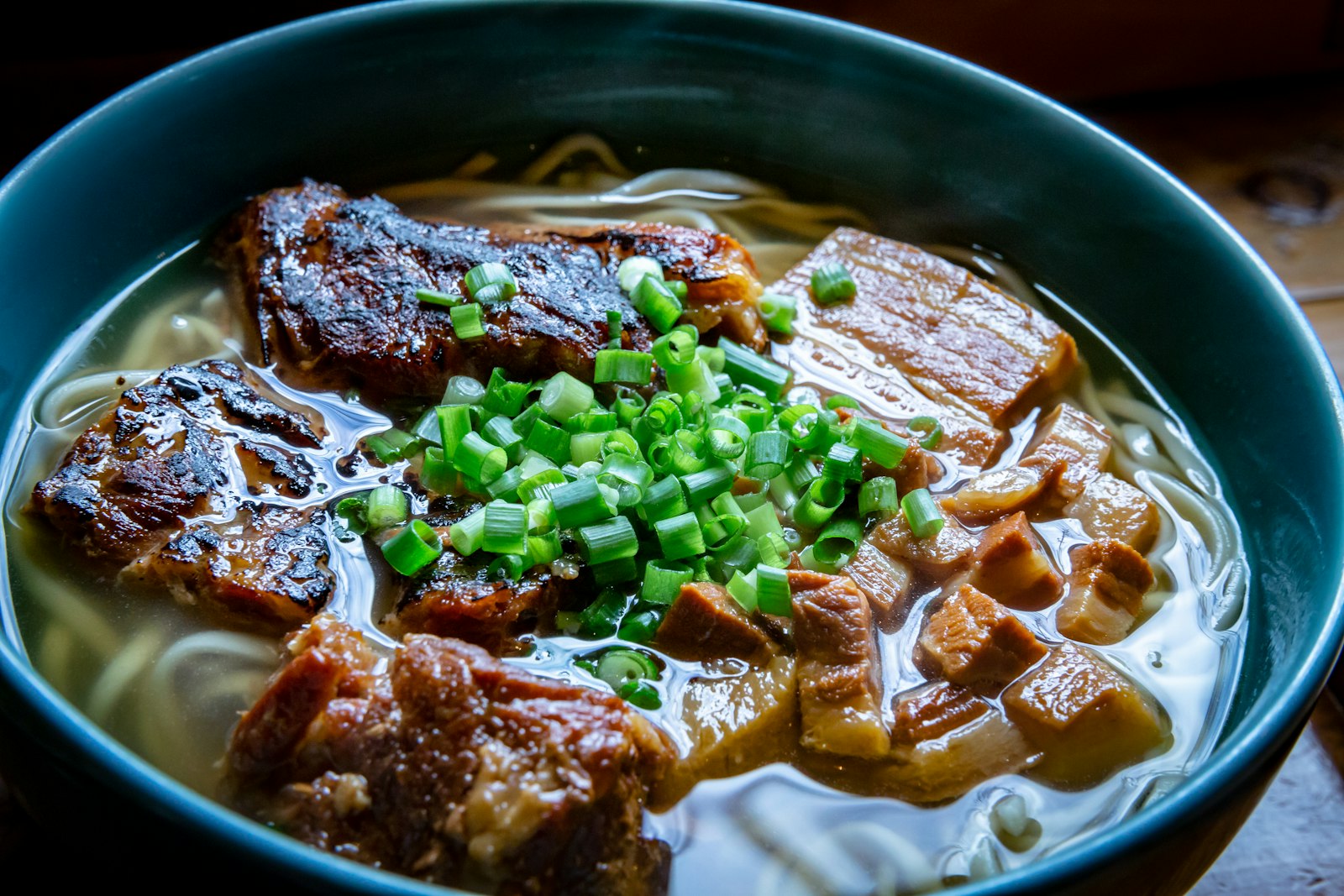
- simmered pork belly, fried fish cake, green onion, red pickled ginger
- Soki soba
- the same bowl topped with pork spare ribs
- Soba bowls at one Chatan shop
- ¥800 to ¥1,350 (about $5 to $9, as of October 2026, official site)
- Best time
- any month
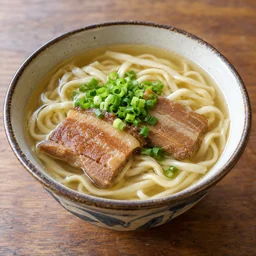

The bowl lands in front of you steaming. The broth is pale and clear, the noodles are thick, yellowish and a little wavy, and a slab of glossy pork belly sits on top with a slice of fish cake, a pinch of green onion and a streak of red pickled ginger. This is Okinawa soba, the island's everyday noodle soup.
This guide explains what's in the bowl, why it's called soba when it has no buckwheat, how to read a menu, and a few places to try it around the main island.
- First-time visitors who want one dish to start with
- Anyone who knows Japanese soba and wonders why this one looks different
- A quick, inexpensive lunch on a day trip north
- Travelers staying in Naha or Chatan
- 100%Wheat flour in the noodles. No buckwheat
- 1.5–1.7 mmNoodle thickness in the cooperative's standards
- 190,000+Servings eaten in Okinawa a day, by the cooperative's estimate
- Oct 17Okinawa Soba Day
As of October 2026; Okinawa Namamen Cooperative official site
Why it's called soba (no buckwheat)
In mainland Japan, soba usually means darker noodles made with buckwheat flour, often eaten cold. Okinawa soba is a different noodle. It's made from wheat flour and an alkaline water called kansui, which gives it a yellowish color and a chewy bite. Japan's Ministry of Agriculture puts its origin in a noodle shop that a Chinese owner opened in Naha in the middle of the Meiji era (1868–1912).
The name fight. In 1976, Japan's Fair Trade Commission told the island's noodle makers that a noodle without buckwheat shouldn't be sold as "soba." The makers pushed back. On October 17, 1978, the name "Okinawa soba" was approved under the labeling rules for fresh noodles. That date is now Okinawa Soba Day (as of October 2026, Okinawa Namamen Cooperative official site).
The standards. The cooperative, a group of local noodle makers, lists 12 standards a noodle must meet to be called Okinawa soba. Among them:
- It's made in Okinawa Prefecture.
- The noodles are 1.5 to 1.7 mm thick.
- The cut noodles are kneaded by hand before boiling.
- They're boiled for about two minutes or less, then coated with oil so they don't stick.
The cooperative's members also hold a "Truly Authentic" certification for regional specialty foods (all as of October 2026, Okinawa Namamen Cooperative official site).
What's in the bowl
A standard bowl has four parts: noodles, broth, pork and a few small toppings.
- Broth. Made mainly from pork and bonito (dried fish flakes). Some shops add chicken, kelp or shiitake mushrooms to make their own version.
- Pork belly. Skin-on pork belly simmered slowly in soy sauce and sugar. The cooperative treats it as part of the classic bowl.
- Fish cake. The fish cake used in Okinawa is fried.
- Green onion and red pickled ginger. The ginger cuts through the rich broth.
(All as of October 2026, Okinawa Namamen Cooperative and Ministry of Agriculture official sites.)
The noodles change by region. The cooperative describes three main styles (as of October 2026, official site):
- North of the main island: firm, flat, ribbon-like noodles, the most filling of the three.
- Naha and the south: medium, wavy noodles that hold the broth well. The cooperative suggests these for a first bowl.
- The Miyako and Yaeyama islands: thinner, round noodles that aren't hand-kneaded.
How to order and eat it
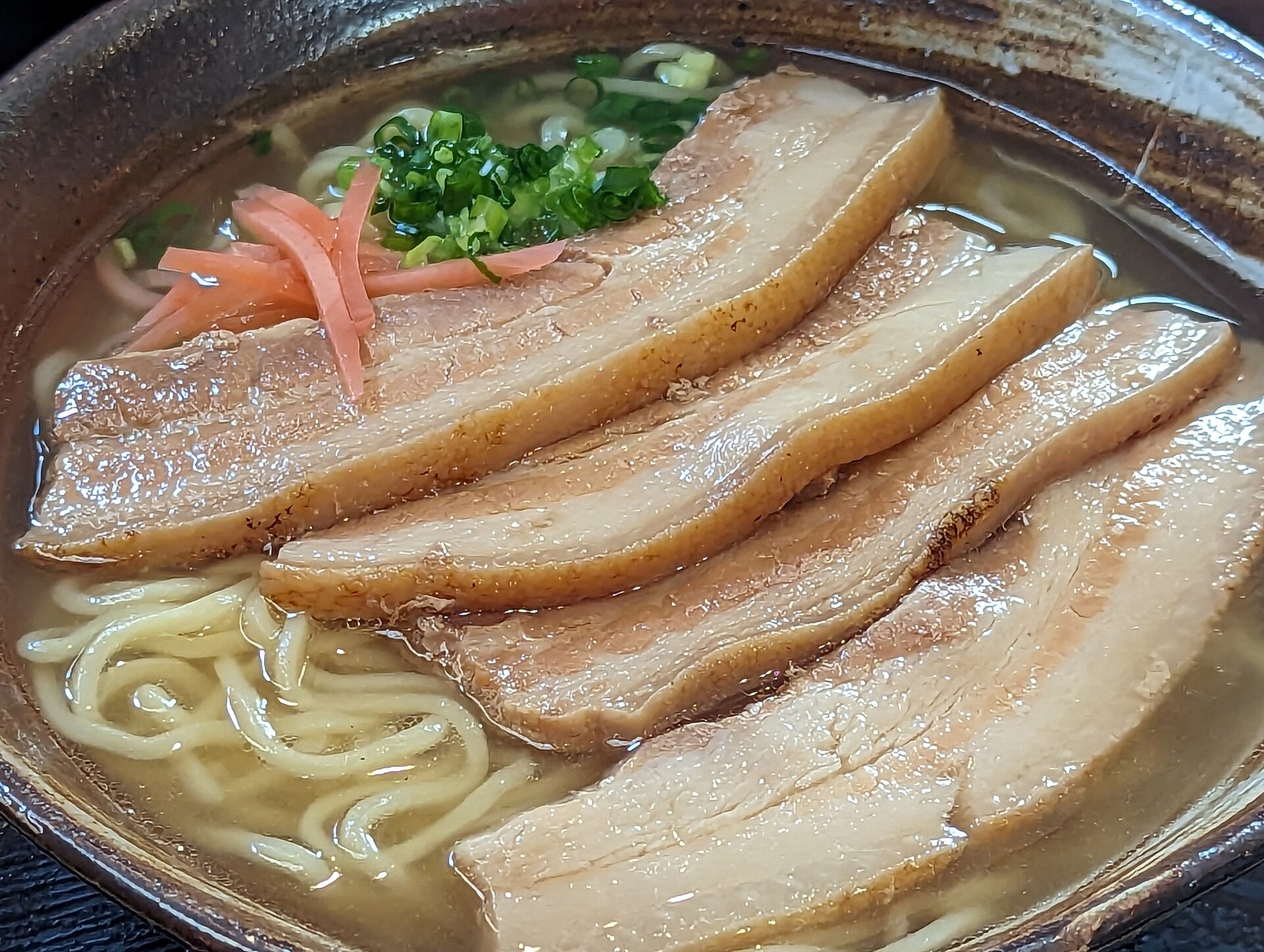
Read the menu by topping. Most menus list soba by what goes on top. The cooperative names these among the common ones: soki soba, tebichi soba, vegetable soba and chicken soba. The Ministry of Agriculture adds nankotsu soki soba.
A real menu, as an example. Jagal Soba in Chatan lists these on its official site. Most soba come with fresh or pre-boiled noodles, and fresh usually costs ¥50 more. The prices below are for fresh noodles (as of October 2026, official site):
- House soba or pork belly soba: ¥980 (about $6.20)
- Mixed soba: ¥1,300 (about $8.25)
- Kids' soba: ¥500 (about $3.20)
- Extra soki, gristle or pork belly: ¥320 each (all as of October 2026, official site)
Dollar figures use ¥157.81 per $1 (as of October 2, 2026, Federal Reserve). Other shops set their own prices.
At the table. Look for a small bottle of koregusu, chili peppers steeped in awamori. The Ministry of Agriculture describes it as a way to add heat and flavor. Try a few drops first; it's strong.
Paying. None of the shops below say on their official pages whether they take cards, so card payment is unconfirmed. Bring cash in yen. Our cash and ATM guide covers where to get it. Japan has no tipping custom, as our 5-day itinerary explains.
Where to try it
You'll find Okinawa soba in three kinds of places:
- Soba shops, where it's the main dish. These are the ones listed below.
- Restaurants serving Okinawan food, where it's one dish among many. The 2nd floor of Makishi Public Market in Naha has restaurants serving Okinawan food.
- Shopping areas such as American Village in Chatan, where several restaurants have it on the menu.
We picked shops whose hours and location we could check on their own official sites, or on an official tourism site. We didn't use review sites or rankings.
Naha
Soba-ya Chirugwa, Tsubogawa (そば家 鶴小 壺川店). A soba shop that also serves Okinawan home cooking. Open 11:30 am to 10:00 pm, last order 9:00 pm, closed Wednesdays. From 3:00 to 5:00 pm only a limited menu is served (as of October 2026, official site).
On the chain's menu page, a plain Okinawa soba is ¥900 (about $5.70) and soki soba or pork belly soba is ¥1,100 (about $7). The page notes a price rise from March 24, 2026, and doesn't say whether tax is included (as of November 2026, official site).
For more choice in Naha, the restaurants upstairs at Makishi Public Market take last orders at 8:00 pm (as of October 2026, Naha City official site). Our Kokusai-dori and market guide has the market's hours and closing days.
Chatan and the central area
Jagal Soba (謝苅そば), Yoshihara, Chatan. A family-run shop, open since 2010, that makes its own noodles and broth and has a view of the sea. Open 10:00 am to 2:30 pm (last order). It doesn't take reservations or orders by phone or social media (as of October 2026, official site).
Regular closing day: unconfirmed — the official site doesn't list one. The shop posts temporary closures on its site and official Instagram, so check there before you go.
Kiseki (貝出汁沖縄そば キセキ), American Village, Chatan. A different style: the broth combines shellfish and pork bone instead of bonito. It's on the 1st floor of the Distortion Seaside Building. Open 11:00 am to 3:30 pm and 5:30 to 8:00 pm (last orders), closed Wednesdays (as of October 2026, American Village official site). Prices are unconfirmed; the American Village page doesn't list them.
Soba-ya Chirugwa also has branches in the central area. The open ones keep the same hours as Naha:
- Chatan branch: closed Tuesdays (since June 2025).
- Misato branch, Okinawa City: closed Thursdays, limited menu 3:00 to 5:00 pm.
- Mihama branch, American Village: closed for now, with no reopening date given (all as of October 2026, official site).
Motobu and the north
Motobu Soba (本部そば), Sakimotobu, Motobu. The Motobu Town Tourism Association lists it in its "Okinawa Soba Road" feature. The shop serves a three-kind soba plate and Okinawan dishes such as taco rice. Motobu is also where Churaumi Aquarium is.
On the shop's menu page, prices include tax:
- Three-kind soba plate: ¥1,050 (about $6.65)
- Soki, gristle or pork belly soba: ¥1,000 regular, ¥900 small (about $6.35 and $5.70) (all as of November 2026, official site)
Its hours don't match between official sources:
- The shop's own Japanese pages (notice dated July 17, 2026): 10:30 am to 3:00 pm, closing earlier if it sells out. Closed Mondays and Tuesdays (as of November 2026, official site).
- The shop's English store page lists the same hours but closing days of Tuesday and Wednesday (as of November 2026, official site).
- The Motobu Town Tourism Association: 11:00 am to 3:30 pm, last order 3:00 pm, closed Wednesdays (as of November 2026, tourism association official site).
Closing days: unconfirmed — check the shop's official page before you drive up.
When to go
Okinawa soba is an everyday dish all year, at home and in restaurants (Ministry of Agriculture). There's no special season for it.
- Typhoons: most often in August and September (Japan Meteorological Agency). On a typhoon day, shops may close. Check the Japan Meteorological Agency for the weather and the shop's official site or social media before heading out.
- Rainy season: usually from around May 10 to around June 21 (Japan Meteorological Agency). A soba lunch is an easy indoor plan.
- October 17: Okinawa Soba Day. In 2026 the cooperative held a noodle sale in Naha on October 16 and 17 (official site). Check its site in early October for the next one.
| Jan | Feb | Mar | Apr | May | Jun | Jul | Aug | Sep | Oct | Nov | Dec | |
|---|---|---|---|---|---|---|---|---|---|---|---|---|
| Avg high | 68°20°C | 68°20°C | 71°22°C | 76°24°C | 81°27°C | 86°30°C | 89°32°C | 89°32°C | 87°31°C | 83°28°C | 77°25°C | 71°22°C |
| Avg low | 59°15°C | 59°15°C | 62°17°C | 66°19°C | 72°22°C | 77°25°C | 81°27°C | 80°27°C | 78°26°C | 74°24°C | 69°20°C | 62°17°C |
| Rain | 4.0"102mm | 4.5"114mm | 5.6"143mm | 6.3"161mm | 9.7"245mm | 11.2"284mm | 7.4"188mm | 9.4"240mm | 10.8"275mm | 7.1"179mm | 4.7"119mm | 4.3"110mm |
| Typhoons | – | – | – | – | 0.4 | 0.6 | 1.5 | 2.2 | 1.9 | 1.1 | 0.3 | – |
| Rainy season | ● | ● | ||||||||||
| Box jellyfish | ● | ● | ● | ● | ||||||||
| Golden Kings | ● | ● | ● | ● | ● | ● | ● | ● |
- Typhoons: about 7.7 a year come near Okinawa, most in August and September. Flights and ferries can stop for a day or two — keep your plans flexible in late summer.
- Rainy season: around May 10 to around June 21 in a typical year.
- Swimming: Swim at managed beaches during their swimming season, when lifeguards keep watch and nets are set against box jellyfish. Many beaches have neither. Check the beach's official page before you go.
- Box jellyfish: advisory June 1 – September 30 (2026); most stings June to September; swim inside the nets and cover your legs.
- Basketball: B.LEAGUE season runs fall to spring, with playoffs in May.
- The nonstop: United's SFO–Naha nonstop starts March 27, 2027, three times a week. Some reports say it is seasonal; that is not confirmed yet.
Climate: Japan Meteorological Agency, Naha climate normals 1991–2020. Typhoons: JMA normals. Jellyfish: Okinawa Prefecture, box jellyfish advisory. Checked 2026-10-10.
Official info
- Okinawa Namamen Cooperative (English page): oki-soba.jp
- Ministry of Agriculture, Okinawa soba: maff.go.jp
- Soba-ya Chirugwa, store list (Japanese): okinawa-soba.co.jp
- Jagal Soba (Japanese): jagal-soba.com
- Kiseki, American Village (Japanese): okinawa-americanvillage.com
- Motobu Soba (Japanese): mmc-okinawa.com
Next:
- Eat upstairs at the market with our Kokusai-dori and Makishi Market guide.
- Pair a soba lunch with the aquarium in Churaumi and the Motobu Peninsula.
- Fit it into a full trip with the 5-day itinerary from SFO.
Sources
- Okinawa Namamen Cooperative — Okinawa Soba and the "Truly Authentic" certification (English)
- Okinawa Namamen Cooperative — About Okinawa soba: the standards, noodle styles and toppings (Japanese)
- Okinawa Namamen Cooperative — Okinawa soba Q&A (Japanese)
- Ministry of Agriculture, Forestry and Fisheries — Our Regional Cuisines: Okinawa Soba
- Ministry of Agriculture, Forestry and Fisheries — Our Regional Cuisines: Sokijiru
- Soba-ya Chirugwa — store list (Japanese)
- Soba-ya Chirugwa — menu (Japanese)
- Jagal Soba (Chatan) — official site (Japanese)
- Okinawa American Village — Kiseki shellfish-broth Okinawa soba (Japanese)
- Motobu Soba (MMC Co.) — official site (Japanese)
- Motobu Soba — store info (Japanese and English)
- Motobu Soba — menu (Japanese)
- Motobu Town Tourism Association — Motobu Soba listing (Japanese)
- Naha City — First Makishi Public Market (Japanese)
- Japan Meteorological Agency — typhoon normals
- Japan Meteorological Agency — rainy season normals for Okinawa
- Federal Reserve H.10 via FRED — USD/JPY